Views: 0 Author: Site Editor Publish Time: 2026-07-02 Origin: Site


Launching commercial energy drinks is subject to stringent technical constraints. Formulas with high acidity and high carbonation require dedicated packaging solutions, where flawless material selection must be prioritized from the very beginning.
For brands moving from conceptual design to mass production, specifying the correct can dimensions and selecting a reliable co-packer are paramount. This acts as the critical link bridging beverage formulation and market launch. Brands need to mitigate chemical reactions between liquid contents and cans, as well as the physical pressure limits of aluminum structures. Poor packaging decisions can derail the entire product launch plan.
This vendor-neutral framework outlines the procurement, specification standardization and scalable mass production of energy drink aluminum cans. Centered on technical feasibility, structural durability and risk control, it helps translate brand design concepts into factory-executable production solutions.
Dominant Can Format: Slim aluminum cans (250ml–355ml / 12oz) dominate the market thanks to excellent pressure retention and consistent consumer retail acceptance.
Non-Negotiable Technical Standard: Highly acidic functional beverages must adopt BPA-NI (Bisphenol A Non-Intent) internal linings to prevent pinhole corrosion leakage and flavor deterioration.
Decoration Cost Trade-off: Shrink sleeves feature low minimum order quantities (MOQs) and flexible design updates, while direct can printing delivers lower unit costs with high MOQ requirements. This choice directly determines upfront investment for private-label energy drinks.
Manufacturer Qualification Audit: Qualified beverage OEMs must provide traceable quality control records to verify robust double-seam integrity and compatibility with tunnel pasteurization.
Energy drinks contain high titratable acidity from citric and malic acids, paired with a carbonation volume of 2.5–3.5 v/v. The highly corrosive high-acid, high-pressure internal environment means bare aluminum cannot come into direct contact with the liquid contents.
Incorrect packaging specifications lead to severe consequences. Unsuitable inner linings will be corroded by acidic liquid, causing pinhole leaks. Substandard can end seams result in structural failure, leading to bulging or bursting under high-temperature warehouse storage. Such defects trigger costly product recalls, damage brand reputation and drastically shorten shelf life.
Compliant packaging is far more than a branding exercise; it is a mandatory food safety and regulatory requirement. Qualified functional beverage packaging safeguards consumer safety and product quality, ensuring structural integrity from the filling line all the way to retail shelves. In the early planning stage, chemical compatibility and pressure resistance must take precedence over visual aesthetics.
Assuming standard carbonated soda cans are suitable for highly acidic energy drink formulas;
Overlooking dramatic internal pressure spikes caused by warehouse temperature fluctuations;
Failing to verify compatibility between beverage vitamins and can internal linings.
Can geometry affects both shelf visibility and supply chain logistics efficiency. Different capacities correspond to established consumer consumption scenarios:
Can Type | Capacity | Applicable Product Categories | Logistical Advantages |
|---|---|---|---|
Slim Can | 250ml / 8.4oz | Concentrated energy drinks | Ideal for cross-border shipping with precise portion control |
Sleek Can | 355ml / 12oz | Natural & sports performance energy drinks | Balanced printing display area and pallet loading density |
Standard Can | 473ml / 16oz | E-sports & extreme sports large-volume energy drinks | Maximized volume for heavy-consumption target groups |
Can ends and pull tabs should adopt industry-standard 200 or 202 diameters for seamless fitting with mainstream seaming equipment. Colored pull tabs enhance brand differentiation, yet standard silver tabs avoid extra tooling costs and long lead times, offering better cost efficiency.
Two primary inner coatings are available: epoxy coatings and BPA-NI linings. Traditional epoxy coatings are heavily restricted by regulations in North America and the EU. BPA-NI linings are mandatory for high-acid energy drinks to block heavy metal leaching and meet global compliance rules.
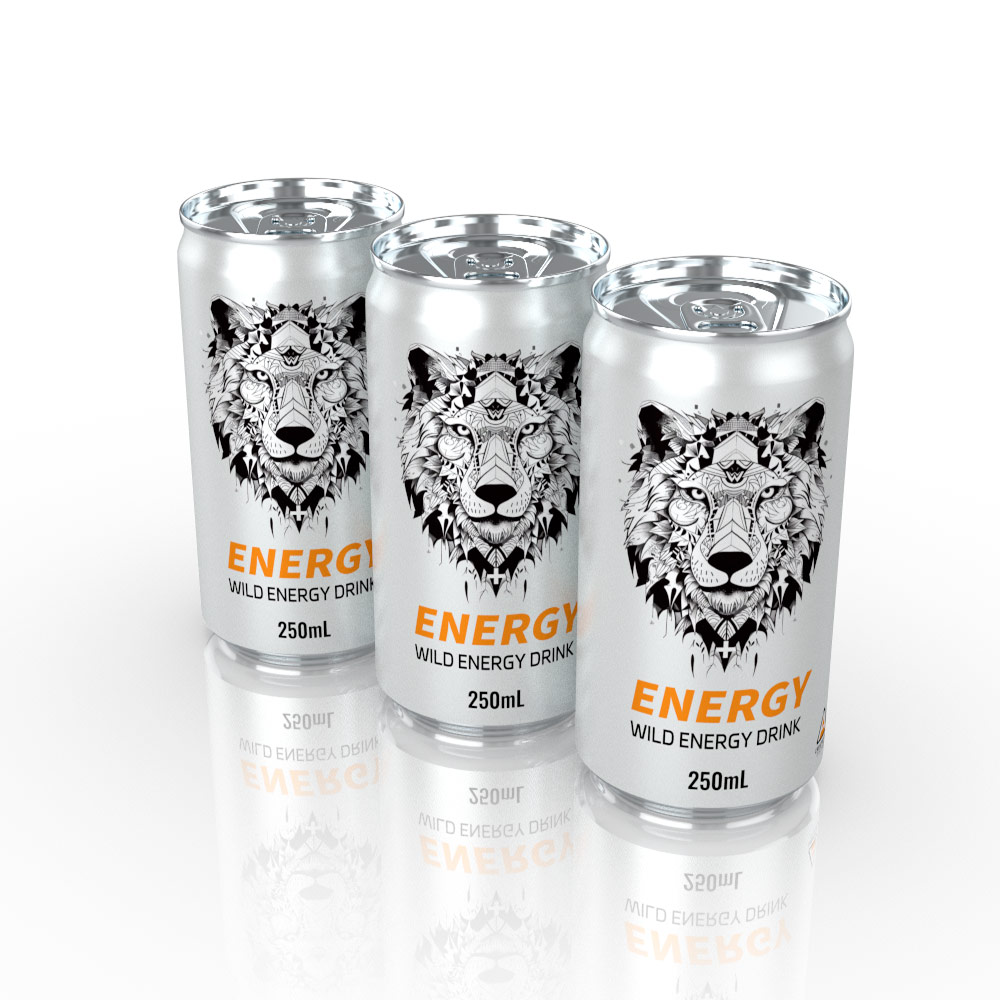
Printing methods directly impact initial capital expenditure and should align with brand development stages. The two mainstream options are compared below:
Blank bright aluminum cans are fitted with heat-shrinkable polymer sleeves.
✅ Advantages: Fast prototyping; multiple SKUs can be produced from one batch of blank cans with a minimum MOQ of 100,000 units.
❌ Disadvantages: Higher per-unit packaging cost; potential cosmetic defects including seam bulges and neck-area sleeve wrinkling.
Graphics are printed directly onto aluminum surfaces via high-speed lithography.
✅ Advantages: Superior tactile texture, the lowest unit cost at high volumes, and fully recyclable cans with no need for label removal.
❌ Disadvantages: High MOQ threshold of 300,000 units per SKU, longer lead times for plate making and color proofing.
Launch small-scale market trials using blank cans with shrink sleeves;
Track sales velocity continuously for 3–6 months;
Screen top-performing SKUs with consistent retail reorders;
Convert only proven best-selling SKUs to direct can printing;
Retain shrink sleeves for seasonal limited editions and experimental flavors to mitigate risks.
Selected cans must withstand the full production workflow: pallet depalletizing → internal rinsing → counter-pressure carbonated filling → high-speed double-seaming.
Thermal pasteurization poses the biggest structural challenge. Most factories use tunnel pasteurization, where cans pass through progressive heating zones. Liquid thermal expansion causes sharp internal pressure surges that can rupture low-quality cans. Two solutions are available: specify high-pressure-resistant cans, or confirm the factory adopts cold filling with Velcorin preservatives to drastically reduce thermal stress.
Three critical quality inspection records must be verified during factory audits:
Regular destructive seam teardown testing and dimensional measurement;
100% automated X-ray filling level inspection for every can;
Standard drop impact testing with zero leakage for finished products.
Confirm long-term partnerships with top-tier can manufacturers such as Crown, Ball and Ardagh, which guarantee can allocation during peak summer selling seasons and prevent production line shutdowns.
Request itemized quotations separating raw material costs (empty cans, ends, cartons) from tolling fees (blending, filling, processing), as bundled pricing often hides excessive markups.
Some factories advertise artificially low MOQs for printed cans but offset costs through expensive line changeover fees. Secure a full detailed fee schedule before signing any agreement.
Avoid signing long-term master service agreements blindly; complete these four validations first:
Request physical samples of blank cans from the supply chain;
Obtain lining specification datasheets to test pH compatibility with your beverage;
Conduct pilot production runs of 1,000–5,000 gallons;
Subject trial batches to simulated warehouse temperature cycling aging tests.
Successful commercialization of energy drinks relies on perfect alignment among can geometry, internal lining chemical compatibility, decoration solutions and factory production capabilities. Skipping verification at any stage will result in can rupture failures and costly recall losses.
Packaging decisions should be data-driven rather than aesthetics-focused. Rigorously test pH-lining compatibility, confirm actual MOQ terms and thermal processing pressure limits. A data-led approach protects brand equity and capital investment.
Initiate preparations immediately by scheduling a technical review with your selected co-packer, applying for formula compatibility assessment and customized packaging quotations, to smoothly turn product concepts into market-ready commercial goods.
A: Typically 12 to 24 months, determined by the compatibility between beverage acidity and the can’s internal lining.
A: Yes. Sleeved blank cans are the standard solution for new product market testing. Strict temperature control during the shrinking process is required to avoid abnormal carbonation pressure inside cans.
A: Regulatory restrictions in the US and EU have phased out traditional BPA-containing linings. BPA-NI coatings prevent heavy metal migration in high-acid energy drinks to meet international market compliance requirements.