
Views: 0 Author: Site Editor Publish Time: 2026-10-07 Origin: Site


Beverage brands eventually reach a critical transition phase when moving from generic packaging to scalable operations. Transitioning to OEM custom aluminum cans dictates both your retail shelf presence and long-term supply chain viability. However, a natural tension often arises during this operational shift. Marketing teams consistently desire premium finishes and complex artwork to capture consumer attention on crowded shelves. Meanwhile, procurement managers must balance these aesthetic goals against strict manufacturing realities. They face rigid minimum order requirements, fluctuating lead times, and strict unit economics.
You need a transparent, vendor-neutral evaluation framework to navigate these complex choices successfully. This comprehensive guide will help you assess manufacturing form factors, direct printing methods, and technical compliance parameters. We will show you how to choose the right production partners and scale your beverage brand efficiently without falling into costly production traps.
Direct-to-can printing offers the lowest unit cost at scale but requires rigid MOQ commitments, whereas shrink sleeving/labeling provides agility for smaller runs.
Selecting between standard and a sleek aluminum can impacts not only brand positioning (e.g., premium/wellness) but also secondary packaging and fulfillment logistics.
Beverage chemistry (pH, carbonation) strictly dictates internal liner requirements (e.g., BPA-NI); a reliable OEM aluminum can manufacturer will demand product testing before production.
Shortlisting an OEM partner requires assessing their proofing process, color-matching accuracy on metal, and contingency plans for supply chain disruptions.
Before approaching a manufacturer, we must establish strict baseline requirements. Form must closely follow function in beverage packaging. You cannot pick a container based on aesthetic preferences alone. We must evaluate how the physical container interacts with everyday consumer habits.
You must evaluate physical dimensions against real-world usage. Consider how consumers will hold the product during consumption. Think about how the container fits into standard vehicle cup holders. Furthermore, analyze your secondary packaging requirements. Will you use plastic pak-tech rings, or do you prefer enclosed cardboard cartons? Each decision impacts the structural requirements of your primary container.
Assess retail shelf constraints: Measure the vertical clearance of standard grocery store shelves in your target category.
Evaluate consumer ergonomics: Determine if your target demographic prefers a wider grip or a slender profile.
Map out secondary packaging compatibility: Confirm that your chosen dimensions fit standard shipping trays without wasting pallet space.
Next, you must assess your initial launch volume versus your projected future scale. Emerging product lines often face severe cash flow constraints. Over-committing to high-volume printed containers can trap crucial capital in unused inventory. When you lock up funds in empty metal shells, you have less money available for active marketing campaigns.
You pay for packaging months before you sell the actual beverage. Therefore, emerging brands need operational agility to test different regional markets. High inventory levels prevent agile pivots if a flavor fails to gain traction. We highly recommend mapping out a realistic 12-month sales projection before signing high-volume purchase agreements.
Brand positioning strongly dictates your physical format choices. You must match the container shape and decoration method directly to your target retail environment. Local craft distribution channels tolerate labeled containers very well. In contrast, national grocery chains generally expect fully printed packaging to convey mainstream legitimacy.
Best Practice: Always visit your target retail aisles in person. Observe the dominant packaging formats in your specific beverage category before making a final decision.
Common Mistake: Designing packaging purely on a flat computer monitor. Digital mockups often ignore the physical realities of shelf lighting and neighboring product competition.
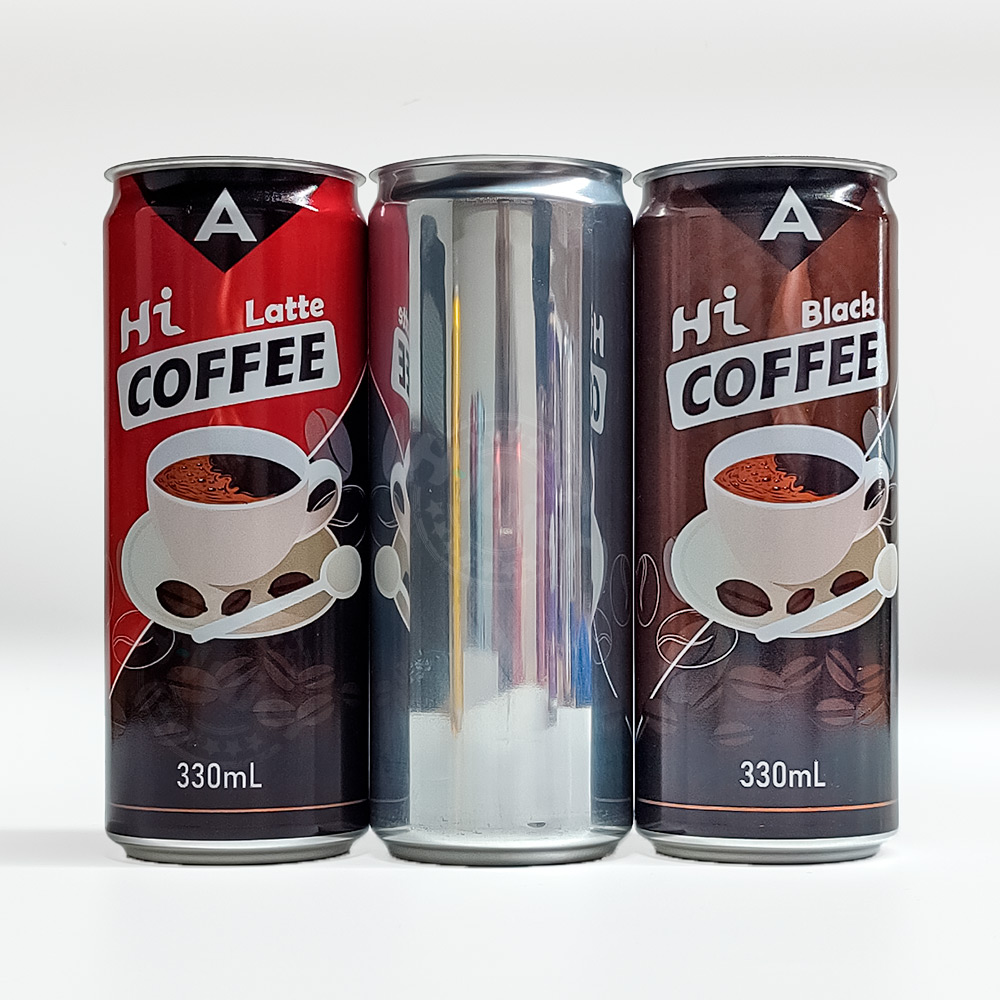
Selecting the correct physical format sets the foundation for your entire production line. Different shapes carry distinct consumer associations and mechanical requirements.
Standard dimensions dominate the global beverage market. Co-packing facilities universally accept these standard measurements without requiring specialized modifications. Tooling remains highly accessible and cost-effective across the industry.
You typically find these standard formats holding craft beer, traditional sodas, and high-volume carbonated drinks. They offer the lowest initial setup barriers for new market entrants. The wider diameter provides excellent stability on fast-moving conveyor belts. Furthermore, standard dimensions maximize the printable surface area for bold, traditional branding.
Modern consumers strongly associate tall, narrow profiles with premium categories. Hard seltzers, cold brew coffees, ready-to-drink (RTD) cocktails, and wellness energy drinks rely heavily on this distinct shape. A sleek aluminum can signals health, lightness, and modern sophistication to passing shoppers.
However, you must evaluate strict logistical criteria before committing to this format. First, assess the direct impact on pallet efficiency. Narrower profiles change how many units fit on a standard shipping pallet. Second, evaluate the specific shelf footprint. Retailers often demand different slotting fees for non-standard dimensions. Finally, you must verify seamer tooling requirements at your chosen co-packing facility. Not all contract manufacturers possess the necessary change parts, such as custom pucks and seamer chucks, to handle slender profiles smoothly.
Once you select a physical format, you must decide how to apply your branding. Your choice here heavily impacts unit costs, minimum order thresholds, and environmental sustainability metrics.
Dry offset lithography remains the absolute industry standard for high-volume commercial scale. This high-speed process uses spinning rubber rollers to apply wet ink directly onto the curved metal surface. The containers then pass through high-temperature ovens to cure the artwork permanently.
You must understand the distinct implementation realities of this method. Designers must work strictly with specific spot colors. Transparent inks will clearly show the bare silver metal underneath, which requires careful artistic planning. Additionally, mechanical trapping limitations restrict how closely different colors can overlap without bleeding.
A fully printed beverage can requires a massive upfront volume commitment. Most major manufacturing facilities demand strict Minimum Order Quantities (MOQs). These thresholds often range from 100,000 to over 200,000 units per single flavor SKU. While this method delivers a remarkably low per-unit cost, it requires substantial upfront financial capital.
Alternatively, many brands utilize shrink sleeving or pressure-sensitive labeling over blank silver containers. This approach proves ideal for rapid market testing, seasonal flavor releases, or complex multi-SKU portfolios with lower individual sales volumes.
Despite the upfront agility, significant risk factors exist. You may face severe sustainability and recyclability pushback from environmentally conscious consumers. Standard shrink sleeves often disrupt local recycling sorting machines unless you utilize specialized perforated or compatible materials. Furthermore, labeling incurs a noticeably higher per-unit cost. You also risk visual application defects, such as unsightly wrinkling around the curved neck of slender formats.
Decision Matrix: Decorating Methods Comparison
Decoration Method | Typical MOQ | Ideal Application Scenario | Key Limitation |
|---|---|---|---|
Direct-to-Can Printing | 100k - 200k+ per SKU | High-volume retail, national distribution | High capital lockup, long lead times |
Shrink Sleeving | 10k - 50k per SKU | Market testing, seasonal releases | Potential recycling issues, higher unit cost |
Pressure-Sensitive Labels | Under 10k per SKU | Local craft taprooms, hyper-niche flavors | Noticeable label edges, moisture peeling risks |
Aesthetics matter, but mechanical integrity determines product survival. The internal and external technical specifications of your packaging must perfectly match your specific liquid chemistry.
The internal coating remains your most critical technical decision. Beverage chemistry directly dictates internal liner selection. Corrosive liquids, such as those with low pH levels, will eat through unprotected metal rapidly. High-acid juices, energy drinks, and high-alcohol beverages demand highly specialized protective barriers.
Historically, manufacturers used standard epoxy liners containing BPA. Today, modern regulations heavily favor BPA-NI (Bisphenol A Non-Intent) coatings. We strongly advise initiating a comprehensive 12-week accelerated corrosivity test. You must fill a small batch and hold it at elevated temperatures to simulate long-term shelf life safely.
Best Practice: Always provide your manufacturer with a complete chemical breakdown of your beverage, including exact pH levels, titratable acidity, and chloride content.
Common Mistake: Assuming one universal liner works for an entire product portfolio. A liner that holds still water perfectly might fail catastrophically when exposed to hard cider.
Carbonated beverages exert continuous outward pressure. The container must withstand this internal force without distorting. You must actively evaluate structural guarantees from your manufacturing partner, especially for high-carbonation or pasteurized products.
Request specific testing data for axial load limits. This metric measures top-down crush resistance, which proves vital during pallet stacking and warehouse storage. Additionally, review the guaranteed buckle strength. This metric identifies the exact internal pressure limit before the bottom dome forcefully reverses and expands outward.
Never assume automatic regulatory compliance. You must request and verify formal documentation from your suppliers. Ensure the manufacturing facility provides verifiable FDA or EU food contact safety certificates. Request recent heavy metal testing results. Furthermore, demand official BPA-NI certification documents to satisfy increasingly strict retail vendor requirements.
Choosing the right production partner significantly mitigates commercial rollout risks. You must evaluate potential suppliers beyond their simple price sheets.
You must understand the proofing process to avoid expensive color surprises on the final production run. Digital flat proofs only show colors on a bright, backlit computer screen. Physical metal reflects ambient light entirely differently. Always request a cylindrical metal pilot proof from a reliable OEM aluminum can partner. This critical step ensures that the final printed colors strictly match your established brand guidelines across all lighting conditions.
Assess the sourcing footprint of your potential partner. Ask whether they rely on domestic raw material mills or imported metal coils. Heavy reliance on single overseas supply routes introduces severe delay risks. You should also investigate their historical lead-time volatility. Ask for references to confirm if they consistently deliver orders on their promised dates during peak summer beverage seasons.
Factor in the hidden logistical burdens of storing empty packaging. Empty containers consume massive amounts of precious warehouse space. Ask if the manufacturer offers flexible, drip-feed delivery schedules (Just-In-Time delivery). Some rigid suppliers require you to take full truckloads immediately upon production completion, forcing you to rent expensive off-site storage facilities.
Watch out for clear warning signs during the vendor vetting process. Eliminate partners who demonstrate any of the following behaviors:
Refusal to guarantee dimensions: Manufacturers unwilling to guarantee strict seam dimensions risk causing massive jams at your co-packing facility.
Vague chemical claims: Suppliers who offer vague liner compatibility claims without demanding your liquid specifications often produce high failure rates.
Lack of clear SLAs: Avoid partners lacking transparent Service Level Agreements regarding acceptable defect rates and subsequent refund protocols.
Successful procurement of customized metal packaging requires a delicate balancing act. You must carefully weigh your ambitious aesthetic goals against strict mechanical boundaries and firm volumetric realities. Moving away from generic labeled containers signals maturity for your brand, but it demands rigorous technical diligence.
Your immediate next step involves finalizing your beverage chemistry report. Gather your exact pH levels, carbonation volumes, and ingredient lists. Next, map out an accurate 12-month volume projection for each specific flavor SKU. Only after securing this hard data should you begin requesting formal quotes or pilot production runs from a qualified manufacturing partner.
A: Most major manufacturers require a minimum commitment of one to two full truckloads per specific design. This typically equates to roughly 100,000 to 200,000 individual units per SKU. However, some specialized digital printing alternatives now offer smaller runs for premium prices.
A: Not without specific mechanical modifications. You must install specialized change parts, including custom holding pucks and appropriately sized seamer chucks. Always verify these specific equipment capabilities with your co-packer before purchasing slender formats.
A: The realistic timeline spans from 8 to 12 weeks. This duration covers initial artwork approval, physical pilot proofing, full-scale production, and final pallet delivery. Timelines often extend during peak summer beverage production seasons.
A: It depends heavily on local sorting technology. Standard polymer sleeves often confuse optical scanners at Materials Recovery Facilities (MRFs), causing them to be sent to landfills. We strongly recommend educating consumers to use zip-tear sleeves before recycling to ensure pure metal recovery.


