
Views: 0 Author: Site Editor Publish Time: 2026-10-23 Origin: Site


Walk down any beverage aisle, and you will quickly notice a trend. The craft beer market is completely saturated today. Standard 16oz tallboys dominate almost every single retail shelf. To stand out, breweries are actively rethinking portion sizes and structural formats. They specifically target premium, high-ABV, and experimental liquid releases. Breweries face a complex trilemma in this highly competitive space. They must visually differentiate their products in crowded retail coolers. They also must maintain strict liquid integrity, especially for highly temperature-sensitive styles. Finally, they need to manage the increasingly volatile logistics of raw packaging materials. This article provides a transparent, operations-focused evaluation of this shifting landscape. We will detail exactly why shifting to short aluminum formats makes clear business sense. We explore the true implementation realities and daily operational hurdles involved. We also show you how to assess procurement viability for your next specialty release.
Portion Control & Premiumization: Short formats naturally align with high-ABV stouts, sours, and barrel-aged beers, allowing breweries to maintain higher margins per ounce.
Superior Liquid Protection: Aluminum provides absolute zero UV exposure and superior hermetic seals compared to glass, driving lower Total Packaged Oxygen (TPO).
Operational Trade-offs: While shipping and pallet density improve, breweries must account for canning line retrofit costs (seamer heights, sensors) and tooling adjustments.
Supply Chain Realities: Minimum Order Quantities (MOQs) dictate the choice between pre-printed cans and shrink-sleeved blanks, heavily impacting unit economics.
Modern craft breweries cannot rely on liquid quality alone. Visual differentiation plays a massive role in consumer purchasing decisions. Moving away from the sea of 16oz tallboys disrupts basic visual expectations. When shoppers scan a retail cooler, a shorter, wider silhouette immediately catches their eye. This strategic disruption in craft beer packaging forces consumers to pause. It signals a specialty product before they even read the label.
Serving size optimization represents another massive advantage. You need to consider consumer drinking habits. Heavy, high-gravity beers require slow sipping. If a consumer drinks a 16oz barrel-aged stout, the liquid often warms up too much. It becomes cloying and loses its intended flavor profile. Shorter formats prevent this rapid temperature drop. An 8.4oz serving perfectly matches the consumption speed for complex beers. Drinkers finish the liquid while it remains at optimal serving temperatures. This approach effectively eliminates flavor fatigue. It keeps the sensory experience sharp from the first sip to the last.
Pricing psychology also heavily favors smaller formats. High-ABV specialty beers cost significantly more to produce. They require expensive ingredients and long maturation times. If you package these liquids in 16oz cans, the retail price per 4-pack often induces severe sticker shock. Consumers hesitate to spend $25 on four cans. However, smaller formats easily justify premium price points per ounce. You can price a 4-pack of short cans at an accessible $16. The consumer feels comfortable making the purchase. Meanwhile, your brewery maintains a highly profitable margin per ounce.
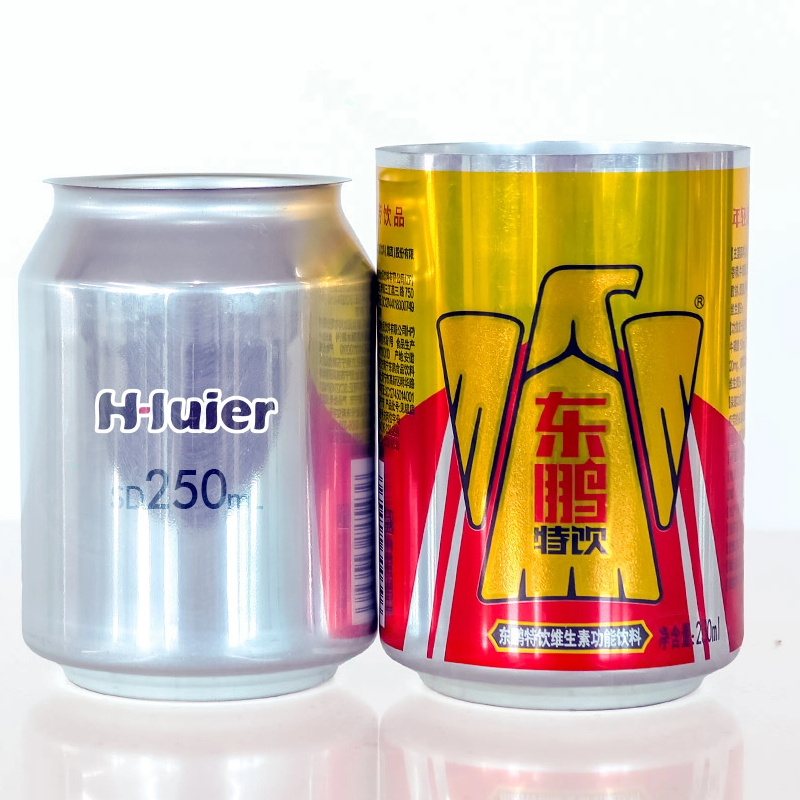
Brewers spend months perfecting complex liquid profiles. Protecting that investment requires the absolute best packaging materials. The debate between glass and aluminum often centers on light and oxygen ingress. When it comes to high-ABV beers, stubby beer cans offer unmatched protection. Aluminum boasts 100% opacity. It entirely eliminates the risk of photochemical degradation. This degradation breaks down iso-alpha acids in hops, causing the infamous skunky off-flavor. Traditional glass stubbies, even brown ones, still let in some UV light. Aluminum completely stops it.
Thermal mass also dictates the quality of the drinking experience. Smaller liquid volumes chill much faster in consumer refrigerators. The high thermal conductivity of aluminum accelerates this process. Consumers open the beer faster. The smaller volume ensures they consume the liquid before it reaches unfavorable ambient temperatures. This rapid consumption window is absolutely crucial for specific craft styles like hazy double IPAs and adjunct stouts.
Seam integrity plays a critical role in long-term stability. Total Packaged Oxygen (TPO) destroys beer flavor over time. Modern double-seam technology on aluminum cans prevents oxygen ingress better than traditional crown caps. Glass bottles often suffer from micro-leaks around the crimped cap. Over a standard 12-month shelf life, cans maintain significantly lower TPO levels. Your barrel-aged barleywine will taste exactly as intended a year later.
Packaging Format | UV Light Opacity | Seal Integrity (12 Months) | Thermal Conductivity | Risk of Skunking |
|---|---|---|---|---|
Short Aluminum Cans | 100% (Absolute Zero UV) | Excellent (Double-Seam) | High (Chills rapidly) | None |
Brown Glass Stubbies | 95% - 98% UV Block | Moderate (Crown Cap) | Low (Chills slowly) | Low, but present |
Clear Glass Bottles | 0% UV Block | Moderate (Crown Cap) | Low (Chills slowly) | Extremely High |
Switching packaging formats demands a rigorous financial evaluation. You must look beyond simple unit costs. Using stubby aluminum cans for craft beer transforms your entire outbound logistics strategy. Let us start by calculating pallet density and freight efficiency. Short cans weigh significantly less than traditional glass bottles. They also stack much more efficiently than standard 16oz or 12oz tall cans. You can fit thousands of additional units onto a single standard pallet. This increased unit-per-pallet count drastically reduces your shipping weight. You spend less money on outbound freight. Distributors also appreciate the highly optimized warehouse space.
You must also factor in current material cost trajectories. Global aluminum supply chain dynamics change constantly. Recent tariff adjustments impact raw material availability. Import considerations can also cause sudden price fluctuations. However, you must compare this against the rapidly rising costs of domestic glass. Glass manufacturing is highly energy-intensive. As energy costs soar, glass prices escalate. Aluminum, while subject to tariffs, often presents a more stable long-term pricing curve. It also incurs far less breakage during transit.
End-of-life and sustainability metrics now carry heavy financial weight. Consumers demand eco-friendly packaging options. Aluminum boasts infinite recyclability. It never loses its structural integrity during the recycling process. This measurable brand asset appeals to eco-conscious craft beer drinkers. Furthermore, many states now enforce strict Extended Producer Responsibility (EPR) packaging laws. Brands must pay fees based on the environmental impact of their packaging. Aluminum compliance offers a distinct advantage here. It typically incurs much lower EPR penalties compared to heavy, single-use glass formats.
The transition to shorter formats requires significant preparation on the production floor. You cannot simply load up short aluminum cans and press start. The realities of adjusting existing packaging infrastructure require careful planning. Equipment retrofitting is often the largest hurdle breweries face during this transition.
First, you must address seamer and filler height adjustments. Most canning lines are originally calibrated for standard 12oz or 16oz heights. Dropping the fill heads and seamer chucks requires mechanical precision. Older, rigid systems might even require expensive custom change-parts. You also need precise in-line sensor recalibration. X-ray fill level inspectors and reject triggers must accurately target the new, lower liquid lines.
Depalletizing and conveyance issues also present daily headaches. Short cans have a drastically different center of gravity. They possess a wider base relative to their height. While they seem stable, they often react unpredictably on high-speed conveyance lines. They can easily tip over during rapid acceleration or deceleration.
To mitigate tipping on your packaging line, you should implement the following steps:
Adjust the physical guide rails tightly to minimize lateral movement.
Reprogram your Variable Frequency Drives (VFDs) to ensure smoother conveyor acceleration.
Inspect and replace any worn dead plates at conveyor transfer points to prevent catching.
Reduce the overall sweep speed at the depalletizer to maintain mass stability.
Finally, operations managers must carefully calculate changeover downtime. Switching lines between standard 16oz formats and short formats takes time. You lose valuable production hours during this mechanical swap. You must calculate the labor costs required to perform the changeover. You also must account for the lost volume during that downtime. Frequent changeovers quickly erode your margins. We highly recommend grouping specialty production runs together. Package several different short-can brands in a single consecutive schedule to minimize mechanical disruptions.
Procurement strategies dictate the success of your packaging pivot. You must first define the ideal volume for your specific liquid. The 250ml stubby can (approximately 8.45oz) serves as a global standard. It offers an excellent balance for high-gravity stouts and mixed-fermentation sours. Alternatively, 330ml options (roughly 11.2oz) mirror traditional European imports. You should evaluate these options based entirely on your target beer style and optimal consumption speed.
Navigating Minimum Order Quantities (MOQs) is your next major hurdle. You must secure custom beer cans without destroying your cash flow. You generally have two distinct procurement pathways.
Pre-printed cans: This pathway offers the absolute best unit economics. However, manufacturers typically require massive truckload MOQs. This option remains best suited for your flagship core brands that move high volumes year-round.
Shrink-sleeved or labeled blanks: This is the most viable path for small-batch, seasonal, or experimental releases. You purchase blank silver cans in much smaller quantities. You then apply custom shrink sleeves or pressure-sensitive labels. It costs slightly more per unit, but it protects your working capital.
Proper vendor auditing ensures your supply chain remains resilient. When selecting a packaging supplier, you must look far beyond the initial quote. Assess their standard lead times carefully. Investigate whether they maintain domestic inventory buffers or rely solely on imported stock. Imported stock often faces port delays and tariff fluctuations. You also must secure clear defect guarantees in writing. A reputable vendor will instantly replace pallets with unseamable flanges or interior liner defects. Never commit to large orders without these guarantees firmly in place.
Stubby cans do not serve as a blanket replacement for your standard packaging formats. Instead, they provide a highly targeted strategy for brand premiumization. They allow you to protect your margins on specialty liquids while delivering an exceptional sensory experience. By shifting to shorter formats, you effectively differentiate your products on crowded shelves. You also completely eliminate the risk of light degradation and oxygen ingress.
Your next steps should focus heavily on operational reality. First, conduct a thorough, localized audit of your current canning line. Assess its modularity and determine the exact mechanical requirements for short-can changeovers. Next, request blank sample runs from regional packaging suppliers. Test these samples extensively on your depalletizer and seamer before committing to any high-volume purchase orders. By moving methodically, you will successfully elevate your craft beer portfolio without disrupting your daily production floor.
A: It depends on the equipment manufacturer. Most modern rotary and inline fillers offer change-parts, but older or rigid systems may require expensive custom tooling or dedicated secondary lines.
A: Yes. The lower volume and high thermal conductivity of aluminum allow for faster chilling times in retail and consumer environments.
A: Import duties on raw aluminum or finished cans can cause price fluctuations. Breweries should secure pricing locks or work with brokers who warehouse domestic stock to mitigate sudden raw material surcharges.


