
Views: 0 Author: Site Editor Publish Time: 2026-10-29 Origin: Site


In carbonated beverage production, the lid is the highest-risk point of failure. A compromised end leads to flat product, catastrophic leaks during transit, and expensive retail recalls. Modern supply chains push packaging to its absolute physical limits. When temperatures rise in summer warehouses, internal pressure inside a sealed can spikes dramatically. The packaging must absorb this stress perfectly.
While consumers occasionally search for aftermarket "reusable lids," commercial beverage manufacturers require highly engineered easy open ends (EOE) designed to hold strict internal pressures. You cannot rely on standard unpressurized closures for volatile sparkling liquids. You need precision-stamped metal profiles built for extreme mechanical tolerances.
Evaluating suppliers requires looking past basic dimensions and verifying buckle strength, coating integrity, and seamer compatibility to protect both margins and brand reputation. Securing the right aluminum can lids for carbonated beverages ensures your product stays fresh, safe, and highly carbonated from the filling line to the consumer's hands.
Pressure Tolerance: Ends must withstand minimum buckle pressures (typically 90+ PSI) to safely contain carbonation under temperature fluctuations.
Coating Compliance: Modern lids require BPA-NI (BPA non-intent) interior linings resistant to the high acidity of sodas and sparkling waters.
Standardization: The 202 can lid remains the industry standard for commercial compatibility, though profiles (like CDL vs. B64) vary in metal efficiency and tooling requirements.
Seaming Integrity: Procurement must align lid specifications exactly with the facility’s seaming chucks and rolls to ensure a hermetic double seam.
Carbonated beverages rely heavily on dissolved CO2. This gas creates high internal pressure. It fluctuates rapidly with supply chain temperatures. During a hot summer transit, a standard cola can experience massive internal force. The packaging must act as a perfect pressure vessel. It cannot yield, warp, or leak under these environmental stresses.
Failure brings severe financial risks. Inadequate specifications lead directly to "peaking" or buckling. This happens when the pressure pushes the lid outwards, ruining the stackability of the can. Score bursts present an even bigger threat. A fractured score line causes micro-leaks, oxygen ingress, and eventual spoilage. You lose entire pallets to sticky spills. Retailers often reject compromised shipments outright, damaging your brand reputation.
To succeed, carbonated beverage packaging must meet strict criteria. You should look for these non-negotiable success markers:
A verifiable hermetic seal capable of locking out oxygen entirely.
Consistent pop and tear force for an effortless consumer experience.
Zero metallic taste transfer into the beverage over a long shelf life.
Flawless stacking geometry to prevent transit damage on pallets.
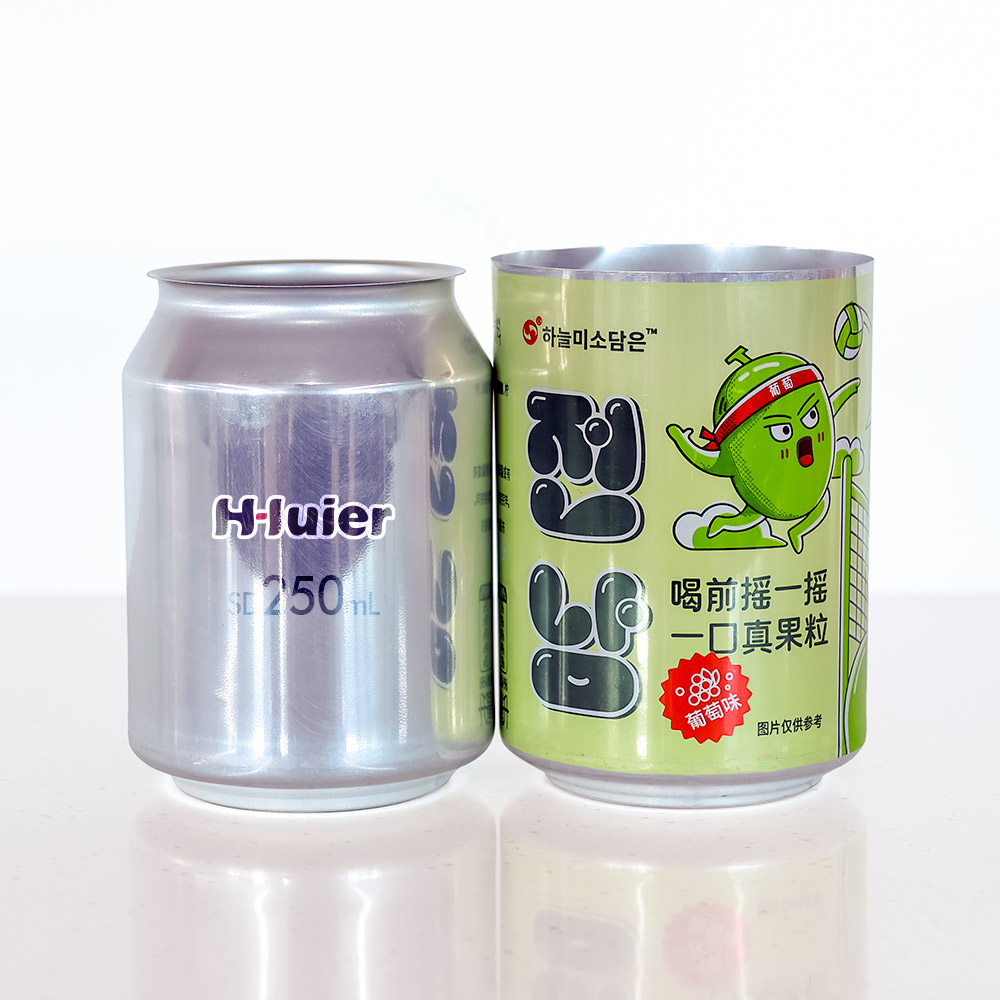
You cannot discuss beverage packaging without understanding industry dimensions. The undisputed industry standard is the 202 can lid. It measures exactly 2.125 inches in diameter. Manufacturers use it universally across standard 12oz, 16oz, and modern sleek carbonated cans. This uniformity allows high-speed filling lines to process millions of units predictably.
However, the basic diameter only tells half the story. The internal profile geometry dictates performance and cost. The industry relies primarily on two main profile types: B64 and CDL. The B64 profile represents the traditional standard. It requires slightly more aluminum per unit. Yet, it remains widely compatible across older seaming equipment. In contrast, the CDL profile offers a lightweight alternative. It reduces overall aluminum usage. This creates substantial material savings over large runs. But you must implement specific seamer tooling conversions to run CDL profiles successfully.
Profile Type | Material Usage | Equipment Compatibility | Cost Efficiency |
|---|---|---|---|
B64 | Higher aluminum content | Broadly compatible with older seamers | Standard unit cost |
CDL | Lightweight design | Requires specialized CDL tooling | Lower material cost at scale |
Beyond the profile, tab mechanisms matter immensely. Modern easy open ends almost exclusively utilize the Stay-On-Tab (SOT) design. This eliminates litter and prevents accidental swallowing. Quality control teams measure the precise pull force required. They test both the "pop" (initial pressure release) and the "tear" (pushing the metal flap down). The tab must tear smoothly without breaking off in the consumer's hand. Tab retention standards ensure it stays firmly anchored to the lid surface after opening.
Carbonated drinks exert intense upward force on beverage can ends. A standard soda might hold up to 3.5 or 4.0 volumes of CO2. When temperatures hit 90°F (32°C) in a delivery truck, this gas expands aggressively. The lid geometry must push back against this rising kinetic energy.
Buckle strength, also known as peaking resistance, is critical. This represents the threshold at which the countersink physically inverts. The countersink is the deep groove around the edge of the lid. It acts like a structural rib. Lids for carbonated drinks must typically guarantee a buckle resistance of 90 PSI (6.2 Bar) or higher. Nitrogen-dosed flat waters might survive lower ratings. Sparkling beverages will violently deform them. Always verify this rating on the supplier's specification sheet.
Score burst resistance is equally vital. The score line is the weakened groove where the lid tears open. Engineers face a paradox here. They must cut the metal deeply enough to open easily for the consumer. Yet, they must leave enough aluminum intact to prevent micro-fractures under peak internal pressure. If the score line fails, the can will prematurely vent its gas. This leaves the consumer with a flat, ruined beverage. Testing protocols subject sample lids to rapid pressurization cycles to verify this exact metric.
Carbonated drinks are surprisingly aggressive liquids. Colas and sparkling waters feature highly acidic formulations. They often register a very low pH. Bare aluminum degrades instantly upon contact with these acids. The acid eats through the metal, causing pinhole leaks and introducing a harsh metallic taste. A protective barrier is absolute necessity.
Historically, manufacturers used BPA-based epoxies. Today, you face a major industry shift toward BPA Non-Intent (BPA-NI) coatings. You must use BPA-NI epoxy or acrylic liners to meet strict consumer safety demands. Major regulatory bodies enforce this transition. FDA regulations, EFSA guidelines in Europe, and California Prop 65 laws mandate rigid compliance. Retailers will reject your product if it fails these safety certifications.
To verify this protection, you must evaluate the enamel rating. This rating measures coating continuity. Quality control teams pass a mild electrical current through a saltwater-filled can. Any exposed metal registers as a jump in milliamps (mA). High-quality suppliers aim for an enamel rating near zero. Even microscopic pinholes in the lining will cause leakers over a 6-month shelf life. Never compromise on liner continuity.
The double seam mechanism forms the heart of modern canning. It relies on the mechanical interlocking of the can body flange and the lid curl. The seamer machine folds these two pieces of metal together twice. It crushes them into an airtight, five-layer metal seal. The lid must have a precisely engineered curl diameter. If the geometry is off by a fraction of a millimeter, the seam will leak.
To fill the microscopic gaps inside this metal fold, manufacturers use a sealing compound. You need a continuous, bubble-free ring of elastomeric material inside the lid curl. It acts as a resilient gasket. This compound can be water-based or solvent-based. It compresses during the seaming process, ensuring absolute gas-tightness. If this rubbery seal dries out or contains air bubbles, CO2 will slowly escape.
At commercial scale, line speed tolerances dominate the conversation. High-speed filling lines often run anywhere from 300 to well over 1,000 cans per minute. Sourcing quality aluminum can lids is essential here. They must stack flawlessly in the machinery's feeding sleeves. Ends with zero nesting or feeding issues prevent catastrophic line jams. Strict dimensional uniformity ensures every single lid drops onto a can body at exactly the right microsecond.
Compression: The lifter pushes the can body up into the seaming chuck, clamping the lid in place.
First Operation Roll: The first roller curls the lid edge underneath the can body flange, creating the initial interlock.
Second Operation Roll: The second roller flattens and irons out the seam tight against the can body, compressing the sealing compound.
Ejection: The sealed container drops down, ready for rinsing and packaging.
Selecting a supplier requires rigorous vetting. Treat this as an engineering validation process. Traceability and QA documentation stand at the top of your checklist. Suppliers must provide batch-specific Certificates of Analysis (COA). This data must confirm buckle strength, pop/tear force, and accurate enamel ratings for every shipment.
Tooling alignment is another frequent failure point. You must verify whether your copacker or internal seamer uses tooling matched to the supplier's specific end profile. A machine set up for B64 profiles will destroy CDL lids. Mismatched tooling causes immediate wrinkling, cutting, and false seams.
You must also monitor storage and shelf life carefully. Aluminum lids have a strict shelf life, usually capped at 6 to 12 months. The metal itself does not expire. However, the sealing compound degrades over time. It dries out and loses elasticity. Factor this expiration window into your Minimum Order Quantities (MOQs) and delivery schedules. Do not buy two years of inventory to get a volume discount.
Your immediate next-step actions should be highly practical. First, request detailed technical specification sheets from potential vendors. Second, conduct seamer teardown tests with a trial pallet to ensure mechanical harmony. Finally, verify liner compatibility by sending your specific beverage chemistry to the supplier for corrosion testing.
Sourcing lids is fundamentally an engineering decision, not just a procurement one. Every variable impacts your product's survival on the shelf. Matching pressure ratings, liner compatibility, and dimensional profiles is completely non-negotiable. A failure in any of these three areas leads to flat drinks, ruined pallets, and lost consumer trust.
Prioritize suppliers offering rigorous quality assurance documentation. Insist on exact tooling compatibility. Never chase marginal per-unit cost savings if it means sacrificing buckle strength or enamel integrity. Investing in highly engineered closures prevents catastrophic packaging failures. Secure your supply chain, test thoroughly, and maintain strict inventory turnover to ensure long-term brand success.
A: The numbers refer to dimensional standards. The 202 can lid (2.125 inches) is the universal standard for most commercial soda and beer cans. The 200 lid is slightly narrower. Manufacturers often use the 200 profile for sleek, slim cans commonly associated with energy drinks or hard seltzers.
A: No. Doing so introduces absolute risk. Non-carbonated or nitrogen-dosed lids lack the engineered buckle strength needed for CO2 expansion. Under normal temperature fluctuations, these weaker lids will rapidly peak, buckle, or burst, leading to complete product failure.
A: BPA-NI stands for BPA Non-Intent. It means manufacturers did not intentionally add Bisphenol-A to the interior coating. This compliance is essential for consumer safety, meeting strict regulations like California Prop 65, and satisfying modern retail distribution requirements.
A: The aluminum itself never expires. However, the rubberized elastomeric sealing compound tucked inside the lid's curl dries out over time. Typically, this compound degrades after 6 to 12 months. Once it hardens, it cannot form an airtight double seam, resulting in flat, spoiled drinks.


