
Views: 0 Author: Site Editor Publish Time: 2026-11-04 Origin: Site


Transitioning to in-house canning is a massive capital expenditure. It directly dictates product quality, shelf life, and operational margins. Manufacturers face significant pressure to choose correctly. Sifting through marketing claims to find a reliable beverage canning machine requires serious diligence. You must evaluate actual yield, seam integrity, and long-term maintenance needs. Buying inadequate equipment causes rapid product spoilage and facility downtime.
Before issuing a purchase order, facility managers and beverage brands must assess their readiness. We will examine five critical operational dimensions to guide your decision. You will learn how to navigate capacity planning, technical requirements, and manufacturer evaluations. This ensures your facility remains profitable and your product remains safe.
Volume dictates architecture: True ROI relies on matching actual (not theoretical) Cans Per Minute (CPM) with your current sales volume and 3-year growth projections.
Integration is the bottleneck: A filler is only as fast as its infeed and outfeed automation; neglecting depalletizing or secondary packaging creates costly idle time.
Seam integrity and DO control are non-negotiable: Subpar seaming and poor Dissolved Oxygen (DO) management will ruin the product and trigger recalls, overriding any upfront equipment savings.
Total Cost of Ownership (TCO) exceeds sticker price: Spare parts availability, localized technical support, and Clean-in-Place (CIP) utility costs often dwarf the initial machine investment.
Deciding to bring operations in-house requires careful financial evaluation. You must define your specific co-packing threshold. This represents the specific volume where paying a co-packer drains your profits. For many brands, producing thousands of monthly barrels makes outsourcing financially unsustainable. Paying a third party quickly becomes more expensive than financing in-house equipment. You need to crunch the numbers. Compare your current outsourcing invoices against a five-year equipment lease.
Owning a full beverage production line provides hidden operational benefits. You regain complete control over quality and agility. Manufacturers eliminate frustrating co-packer scheduling conflicts. You significantly reduce product loss during transport. Ownership also enables rapid prototyping for new beverage lines. You can run small test batches without paying hefty minimum order fees. This flexibility allows brands to respond quickly to market trends.
However, you need a strict financial reality check. The machine itself is just one part of the investment. A proper installation demands significant facility upgrades. You must budget for these specific capital requirements:
Facility Drainage: Sloped, high-capacity trench drains are mandatory for managing spills and washdowns.
Epoxy Floors: Bare concrete degrades quickly under acidic beverage spills and heavy equipment traffic.
Electrical Upgrades: Industrial fillers demand robust three-phase power systems to operate consistently.
Pneumatic Systems: Reliable compressed air is necessary for automated valves and pneumatic actuators.
Understanding equipment capacity prevents disastrous production shortfalls. Many buyers fall into the theoretical CPM trap. A machine rated for 100 Cans Per Minute (CPM) rarely runs at maximum speed. Real-world scenarios often drop operational speeds to 75-80 CPM. Temperature fluctuations disrupt consistent filling. High carbonation levels cause severe foaming issues. Operator efficiency directly impacts daily throughput. You must plan your production schedule around operational yield, never theoretical maximums.
Choosing between linear and rotary configurations dictates your scalability. Linear machines work best for smaller footprints. They operate at lower speeds and offer easier format changeovers. Rotary machines are essential for high-speed, continuous commercial scaling. They utilize a circular carousel to fill multiple cans simultaneously. However, rotary units require higher upfront capital expenditure and advanced maintenance expertise.
Comparison of Filler Configurations
Configuration Style | Ideal Production Environment | Changeover Complexity | Floor Space Required |
|---|---|---|---|
Linear | Craft breweries, pilot plants, seasonal batches | Low (Quick adjustments) | Minimal to Moderate |
Rotary | Commercial scaling, continuous high-volume runs | High (Requires specialized parts) | Extensive |
Facility bottlenecks often cause an automation domino effect. Standardizing your workflow prevents these issues. A high-speed filler cannot perform if the infeed system relies on manual labor. Manual depalletizing artificially limits the filler’s maximum output. Every piece of equipment must match the speed of the primary filling unit. Uneven automation creates costly idle time and frustrates operators.
Successfully executing aluminum can filling demands strict environmental control. Dissolved Oxygen (DO) management is paramount. High DO levels directly shorten shelf life. They destroy flavor stability and increase oxidation risks. You must implement robust pre-purge systems using CO2 or nitrogen. These gases displace oxygen before the beverage enters the container. Under-cover gassing is equally important. This process blasts gas across the beverage surface right before sealing. It eliminates atmospheric oxygen from the headspace.
The can sealing machine acts as your primary safety checkpoint. Frame the seamer as the most critical compliance component in your factory. It must perform flawlessly. Double-seam integrity relies on strict micrometer tolerances. The seaming rolls and chuck must align perfectly to fold the metal. Operators must conduct repeatable, verifiable seal testing during every shift. A subpar seam allows bacteria to enter. This ruins the product and triggers catastrophic public recalls.
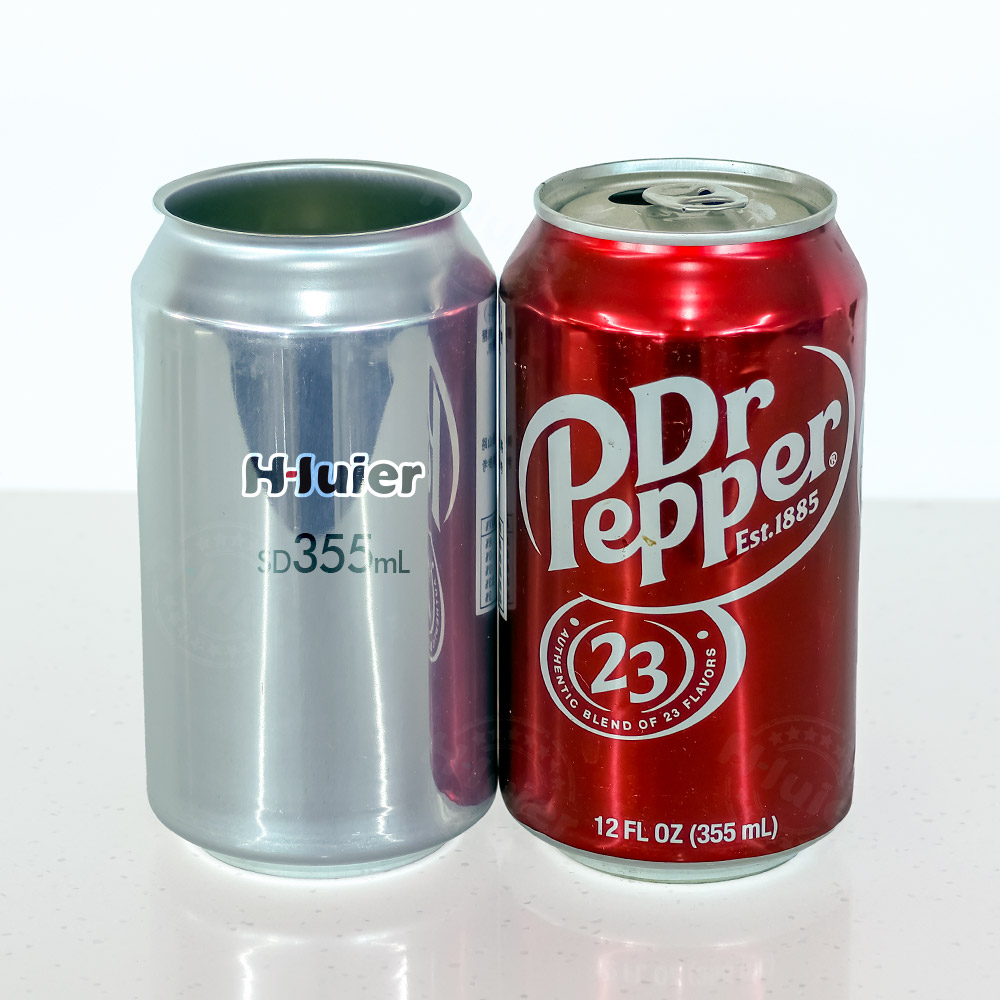
Format flexibility dictates how easily you can adapt to consumer trends. Evaluate the time and cost required for changeover parts. Switching between standard 12oz (355ml), sleek, and slim can formats requires specific tooling. Fast changeovers keep production schedules on track. Complex changeovers cause prolonged downtime. Request a live demonstration of a format change before purchasing. This reveals the true mechanical complexity of the system.
Your new equipment must communicate seamlessly with existing machinery. Integrating the unit into your broader filling line requires upstream and downstream planning. Upstream integration prepares the container for the liquid. Automated depalletizers sweep empty cans onto the conveyor smoothly. Twist rinsers invert the cans for cleaning. Ionized air cleaning systems blast away dust and debris. These steps ensure a completely sterile container prior to filling.
Downstream handling manages the sealed product. Managing the transition from the seamer requires gentle automation. Rough conveyors cause dents and microscopic seam fractures. The product may move through pasteurization tunnels to ensure microbial stability. Date coders apply legally required lot numbers. Fill-level inspectors use X-ray or weight sensors to reject underfilled cans. Multi-packing stations bundle the final product into retail-ready cartons. Every transfer point must remain perfectly synchronized.
Utility and compliance readiness govern your daily operations. You cannot run a commercial facility without proper inputs. Ensure your factory meets these fundamental requirements:
Food-grade compressed air: Prevents oil and moisture from contaminating pneumatic valves.
Glycol chilling systems: Maintains near-freezing temperatures required for carbonated beverages.
CIP (Clean-in-Place) infrastructure: Delivers automated, high-temperature chemical flushing.
Regulatory compliance: Adheres strictly to local food safety and wastewater regulations.
Selecting an equipment manufacturer requires looking beyond the initial sticker price. You must protect your operation from extended downtime. Always verify domestic support capabilities. Demand strict Service Level Agreement (SLA) terms before signing. These terms must guarantee rapid spare parts delivery. They must also specify on-site technician availability. If a machine breaks down during peak season, waiting weeks for overseas parts destroys your profit margins. Downtime costs money every single minute.
Do not buy purely on price. Budget-friendly options often carry massive hidden risks. Buying imported, ultra-low-cost machinery frequently leads to compliance failures. These machines often lack verified safety certifications like CE or UL. Operating uncertified equipment voids insurance policies and endangers staff. Furthermore, verify the control systems. Insist on standardized, off-the-shelf PLC components from reputable brands like Allen-Bradley or Siemens. Proprietary controllers lock you into expensive, localized repair monopolies.
Carefully evaluate the Human-Machine Interface (HMI). The HMI dictates how your operators interact with the equipment. Look for intuitive, touchscreen software. Complex menus cause operator errors and increase training time. The software must simplify daily tasks. It should automatically track error logs for maintenance reviews. Modern HMIs also integrate directly with factory ERP systems. This connectivity provides real-time data on production efficiency and material usage.
Selecting the right packaging equipment requires balancing current budget constraints with future scalability. You must prioritize strict DO control to protect your product's flavor and shelf life. Ensuring seamless line integration prevents automation bottlenecks from crippling your output. Reliable equipment protects your brand reputation and secures your operational margins.
Take immediate action to prepare your facility. First, conduct a comprehensive site utility audit. Verify your electrical, pneumatic, and drainage capacities. Next, request verifiable performance data from equipment manufacturers. Ask for Overall Equipment Effectiveness (OEE) metrics based on real-world installations. Do this before requesting a formal quote. Proper preparation guarantees a successful, profitable equipment launch.
A: Floor space varies heavily based on configuration. Compact, modular linear units can operate in under 150 square feet. Full rotary lines with automated depalletizers, pasteurization tunnels, and secondary packaging often require upward of 2,000 square feet. Always account for raw material storage and forklift turning radiuses when planning your layout.
A: Yes, but it requires specific technology. Carbonated beverages require counter-pressure filling to prevent foaming and retain CO2. Still beverages typically use gravity or atmospheric filling. High-quality counter-pressure machines can often handle both, but gravity fillers cannot process carbonated liquids. Always specify your complete product range to the manufacturer.
A: A well-maintained commercial seamer can last 15 to 20 years. Lifespan depends entirely on maintenance schedules and duty cycles. Chucks and seaming rolls wear down and require replacement every 10 to 15 million cans. Strict preventative maintenance, daily lubrication, and routine micrometer calibrations significantly extend the machine's operational life.
A: CIP uses automated flushing to sanitize internal piping without dismantling the machine. It circulates caustic chemicals, sanitizers, and hot water through the filler valves. The process relies on precise temperature control, chemical dosing, and flow velocity to strip away organic residue. This ensures strict food safety compliance between product batches.


