
Views: 0 Author: Site Editor Publish Time: 2026-10-17 Origin: Site


Selecting the right packaging format is a critical, margin-defining decision for modern beverage brands. It directly dictates filling line compatibility, retail shelf presence, and global shipping economics. The traditional 12oz or 330ml can remains an absolute industry workhorse. However, consumer preferences shift rapidly. Rising demand for functional sodas, hard seltzers, and premium sparkling waters changes everything. This evolving landscape pushes sleek and slim formats directly into the mainstream market. Beverage producers now face complex operational choices when launching new products. This guide breaks down the engineering, supply chain, and commercial realities of standard vs sleek vs slim aluminum cans. You will learn how to source the ideal packaging for your specific carbonated product lines. By understanding dimensional impacts and line constraints, you can launch efficiently and protect your profit margins.
Standard Cans: Offer the lowest per-unit cost, highest co-packer compatibility, and most efficient pallet density. Ideal for high-volume, traditional carbonated beverages.
Sleek Cans: Provide a premium aesthetic while maintaining standard volume capacities (e.g., 12oz/330ml). They require specific filling line changeovers but support higher retail price points.
Slim Cans: Built for smaller capacities (e.g., 8.4oz/250ml) and strongly associated with energy drinks, functional waters, and portion-controlled health beverages.
Operational Barrier: Adopting sleek or slim cans often dictates narrower diameter ends (e.g., 200 or 202) and may limit your choice of available contract manufacturers (co-packers).
Accurate dimensional data serves as the foundation for any successful beverage launch. You need precise physical measurements for secondary packaging layouts and label designs. These metrics also help procurement teams calculate freight efficiency accurately. Small measurement differences drastically alter filling operations. Understanding various beverage can sizes ensures smooth production runs. Let us break down the standard metrics across three core formats.
Standard aluminum cans dominate global traditional beverage markets. They typically hold 12 oz in the US market. Globally, they usually hold 330 ml of liquid. Larger pint sizes reach 16 oz capacities. A standard 12oz can features a diameter of roughly 2.60 inches (66mm). Its overall height measures about 4.83 inches (122.7mm). This format generally utilizes standard 202 ends for sealing.
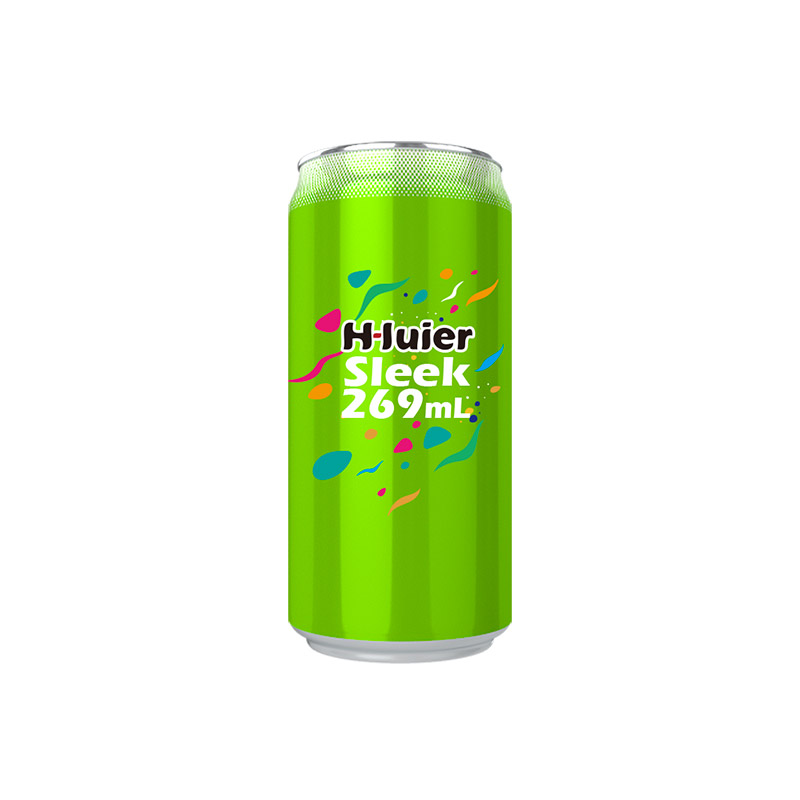
Sleek cans offer identical volume capacities inside a taller profile. They typically hold 12 oz, 330 ml, or 355 ml. A 12oz sleek can measures about 2.25 inches (57mm) in diameter. The vertical height reaches 6.12 inches (155mm). This format usually pairs seamlessly using either 202 or 200 ends.
Slim cans serve smaller, portion-controlled serving sizes. Typical volumes include 8.4 oz and 250 ml formats. An 8.4oz slim can has a narrow 2.09-inch (53mm) diameter. Its height sits at 5.29 inches (134mm). Slim formats typically utilize narrower 200 ends to match the body.
Baseline Specifications Comparison
Format | Typical Volumes | Diameter | Height | Lid Standard |
|---|---|---|---|---|
Standard | 12 oz / 330 ml / 16 oz | ~2.60 in (66mm) | ~4.83 in (122.7mm) | 202 Ends |
Sleek | 12 oz / 330 ml / 355 ml | ~2.25 in (57mm) | ~6.12 in (155mm) | 202 or 200 Ends |
Slim | 8.4 oz / 250 ml | ~2.09 in (53mm) | ~5.29 in (134mm) | 200 Ends |
Carbonated soft drinks (CSD) exert significant internal pressure on packaging. Metal structures must prevent buckling, dome reversal, and bursting. Temperature changes cause intense liquid and gas expansion during transit. Carbonated drink cans manage these extreme physical forces safely. High-quality engineering prevents catastrophic product loss.
Standard CSDs usually contain 3 to 4 volumes of dissolved CO2. This creates internal pressures far exceeding lightly sparkling waters. Engineering standards require pressure ratings robust enough for pasteurization. The packaging must also survive warm transport scenarios without warping. Burst testing ensures safety across different climate zones.
Wall thickness and lightweighting play crucial roles in can manufacturing. Sleek and slim cans distribute internal pressure differently than standard bodies. Their taller, narrower geometry requires highly precise aluminum gauge adjustments. Manufacturers use advanced metal forming techniques to maintain structural integrity. Food-grade internal epoxy or polymer coatings line the interior walls. High-acid carbonated beverages mandate BPA-NI (Non-Intent) standard coatings globally. This prevents metallic off-flavors and protects against structural corrosion.
The bottom dome design acts as an essential mechanical pressure valve. This inverted dome safely manages internal gas expansion during transport. Standard cans historically handled high-carbonation liquids best. Their wider base offers superior stability and uniform pressure distribution. Slimmer profiles demand stricter engineering tolerances to achieve similar structural integrity. A poorly engineered dome will reverse and cause base instability.
The most aesthetically pleasing container fails if it disrupts production. High tooling costs can easily erode projected brand margins. Manufacturers must evaluate filling line realities carefully before ordering materials. You must build a resilient supply chain to ensure product availability.
Filling line changeovers cost money and create frustrating downtime. A line configured for standard aluminum cans requires specific mechanical components. Transitioning to sleek or slim cans demands new seamer chucks. Technicians must also swap out star wheels and guide rails. Many regional co-packers lack this flexible tooling inventory entirely. They only run standard 202 ends and standard wide bodies. You must confirm equipment compatibility early in the planning phase.
Lid sourcing introduces another complex supply chain layer. Standard 202 CDL or B64 ends boast ubiquitous global availability. Conversely, sourcing 200 ends for slim variants presents distinct procurement nuances. Smaller production runs might face severely constrained lid supplies. You cannot seal the product if the specific ends remain unavailable. Delays in lid delivery will halt your entire production schedule.
Pallet and freight density dramatically impact final landed costs. Empty space inside shipping trucks wastes valuable budget. A standard 40x48 pallet holds roughly 7,000 to 8,000 standard 12oz cans. Sleek and slim cans pack more densely per pallet layer. However, they require incredibly careful stacking due to narrower bases. Shipping air drives up per-unit costs very quickly. You must optimize pallet configurations to protect profit margins. Slip sheets and tier dividers help stabilize narrower formats.
Packaging formats directly signal product categories to retail consumers. Shoppers judge price tiers before they even read a printed label. Your chosen format becomes an instant, silent brand ambassador. Retailers also organize shelves based on distinct dimensional profiles.
Standard formats communicate value, tradition, and generous volume. They remain the undisputed choice for craft beer and traditional sodas. Value-tier sparkling waters also rely heavily on this familiar shape. It feels sturdy, reliable, and highly approachable in hand. The wide canvas offers maximum billboard space for graphic elements. Consumers instantly recognize the standard shape across global markets.
Sleek formats serve as the industry shorthand for "premium" products. Brands extensively use them for hard seltzers and premium botanical mixers. Craft mocktails leverage this taller shape to justify higher retail prices. The elongated profile dominates modern retail shelves seamlessly. It conveys elegance and modern aesthetics to younger demographics. Sleek cans often capture higher margin profiles in retail settings.
Slim formats carry highly specific psychological associations for buyers. Consumers link them to "functional," "potent," or "low-calorie" descriptors. Energy drinks completely dominate this specific packaging lane today. CBD-infused sparkling waters and portion-controlled RTD cocktails also favor slim profiles. This shape signals a concentrated, highly effective beverage experience. It implies strict portion control and potent active ingredients.
Standard: Values tradition, high volume, and approachable pricing.
Sleek: Signals premium ingredients, modern taste, and lifestyle branding.
Slim: Highlights functionality, potency, and precise portion control.
Procurement and brand teams need a practical step-by-step decision matrix. Evaluating formats requires balancing marketing goals against harsh production realities. You must align your vision alongside realistic manufacturing capabilities.
First, consider production volume and Minimum Order Quantity (MOQ) limits. You can choose printed, shrink-sleeved, or blank brite cans. Standard printed cans consistently offer the lowest MOQs globally. They also provide the absolute fastest production lead times. Conversely, sleek and slim printed cans require much larger commitments. Tier-1 manufacturers often demand higher MOQs for these specialized sizes. Blank brite cans covered in shrink sleeves offer a low-volume alternative. However, sleeves increase the per-unit material cost significantly.
Next, conduct a rigorous, realistic cost-to-benefit analysis. A sleek can usually increases your unit and inbound freight costs. You must determine if the resulting retail margin increase offsets these expenses. Premium pricing must comfortably cover the operational packaging premium. Consider secondary packaging costs like specialized cartons and PakTech carriers.
Use this shortlisting logic for your next beverage launch:
Choose Standard if: Your operating margin is tight. Your production volume is high. Co-packer flexibility remains essential to your strategy.
Choose Sleek if: You are launching a premium CSD or seltzer. The shelf standout effect easily justifies a 10-15% packaging premium.
Choose Slim if: You are launching a functional or energy beverage. Product efficacy and potency directly dictate a smaller serving size.
The choice between standard, sleek, and slim formats goes beyond aesthetics. It represents a vital intersection of marketing intent, engineering physics, and supply chain readiness. Beverage brands must align their packaging choices directly with production realities. A beautiful can design means nothing if manufacturers cannot fill it properly.
Moving forward, advise your procurement teams to act strategically. Secure co-packer commitments for specific can end sizes immediately. Finalize tooling requirements like 200 versus 202 ends early. Do this before committing to a bulk purchase of empty cans. Always secure these details before commissioning final label artwork. Thorough preparation prevents costly manufacturing delays and ensures a highly successful product launch.
A: Yes. However, it requires specific pressure-rated aluminum gauges. You must also use compatible ends engineered for higher internal pressure limits to prevent bursting or dome reversal.
A: No. A 12oz sleek can holds the exact same volume as a 12oz standard can. The dimensions are simply re-proportioned to create a taller, narrower profile.
A: It stands for BPA Non-Intent. This serves as the current regulatory and commercial standard for internal can liners, ensuring no BPA is intentionally added during manufacturing.
A: All aluminum cans are infinitely recyclable. However, slight variations in aluminum gauge and shipping density can mildly impact the overall carbon footprint per ounce of liquid.


