
Views: 0 Author: Site Editor Publish Time: 2026-11-05 Origin: Site


Selecting the right packaging is no longer just about branding aesthetics. It is a critical operational decision today. The choices you make impact shelf life, filling line efficiency, and long-term brand viability. Unfortunately, a mismatch between beverage chemistry, can specifications, and filling equipment happens too often. It directly leads to rapid product spoilage, costly line downtime, and blown budgets. Addressing these technical gaps early prevents massive commercial failures.
Successfully scaling a beverage product requires perfectly aligning custom aluminum cans applications with precise product specifications. We will show you how to navigate internal coatings, alloy strengths, exterior finishes, and modern supply chain realities. You will learn exactly how to match these technical elements to your specific operational requirements. By the end, you will possess the knowledge to confidently specify packaging for any production run.
Beverage chemistry (pH and carbonation) directly dictates internal liner requirements and can body thickness.
The choice between a standard and a sleek aluminum can impacts not only brand positioning but also secondary packaging and pallet density.
Direct-to-can printing offers superior unit economics at scale, but minimum order quantities (MOQs) require careful cash-flow analysis compared to shrink sleeves.
Vetting an OEM aluminum can partner requires evaluating quality control metrics like seam integrity, coating consistency, and food-contact compliance.
Beverage chemistry dictates your packaging baseline. Acidic liquids like kombucha, hard seltzers, and wine present significant challenges. They increase internal corrosion risks. High carbonation levels multiply this threat by adding mechanical stress. A weak internal coating will fail under these conditions. The liquid will eat through the aluminum. This causes leaks and ruins the product.
You must select the correct internal liner. Modern health and regulatory standards push brands away from older materials. Transitioning to BPNI (BPA non-intent) epoxy or acrylic liners is standard practice now. BPNI liners protect the beverage flavor. They also comply with strict global food safety regulations. Always match the coating weight to your liquid’s corrosiveness. A standard beer requires a different liner thickness than a high-acid energy drink.
Aluminum is not a single, uniform material. Industry manufacturers use specific alloys for different can components. We typically specify the 3104 or 3004 aluminum alloy for the can body. These alloys possess excellent ductility. They handle the rigorous draw-and-iron manufacturing process without tearing. They stretch cleanly to form the cylinder.
The lids and tabs require different properties. They must withstand immense internal pressure. They also need enough rigidity so the tab pops open correctly. Therefore, manufacturers use the stronger 5182 alloy for ends and tabs.
Pressure ratings also influence material thickness. You must match the can thickness to your pasteurization process. Retort processing involves extreme heat and pressure. It requires a thicker aluminum gauge to prevent deformation. Cold fill processes exert less stress. They allow for lighter, thinner cans. Choosing the wrong gauge results in buckled or exploded cans on the line.
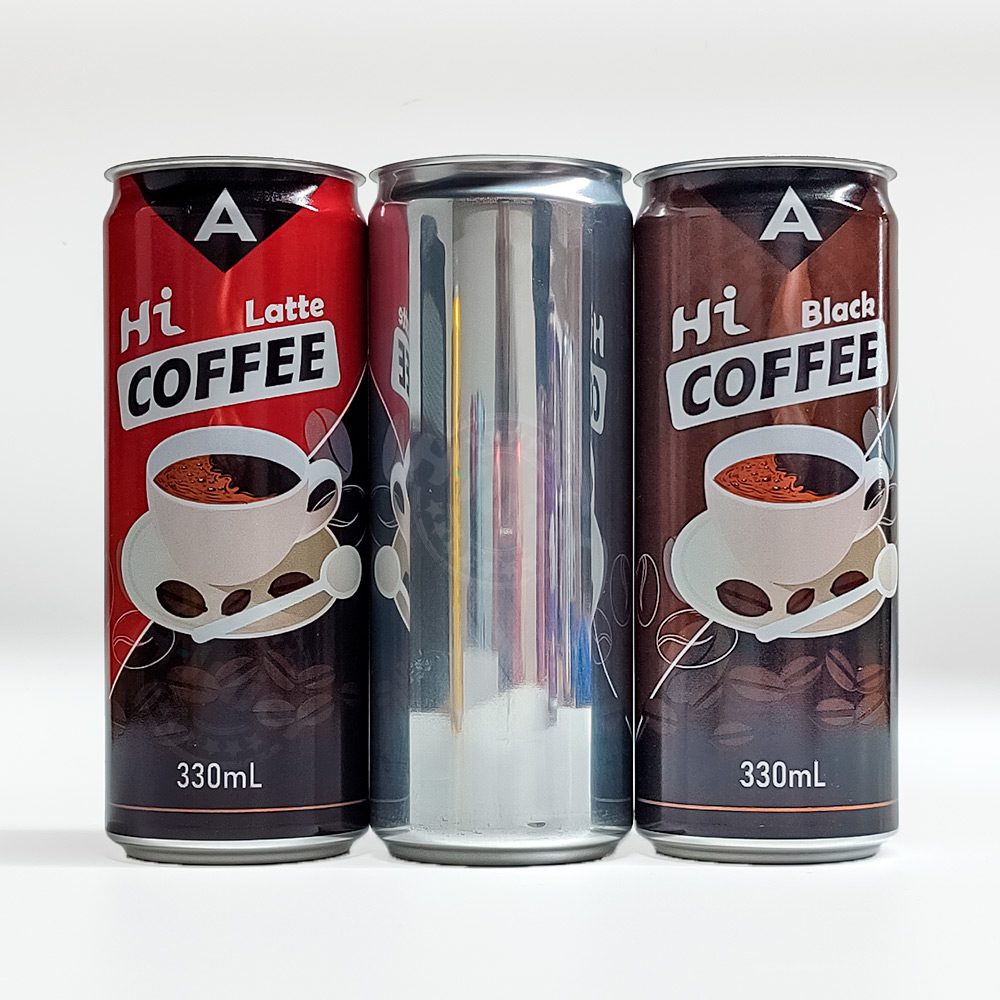
Can dimensions directly influence consumer perception. The standard 12 oz (355ml) and 16 oz (473ml) cans dominate the market. They offer a familiar, robust feel. However, a sleek aluminum can provides a distinct alternative. It usually holds 12 oz (355ml) but features a taller, narrower profile. Slim formats go even smaller, often hitting 8 oz (250ml).
Brand positioning maps closely to these formats. Standard cans align perfectly with craft beer and traditional sodas. They project authenticity and value. Conversely, sleek formats signal premium quality. They dominate the energy drink and hard seltzer categories. The taller profile feels sophisticated. It stands out visually on crowded retail shelves.
Table 1: Dimensional Comparison of Common Beverage Cans
Format Category | Typical Capacity | Common Application | Brand Perception |
|---|---|---|---|
Standard | 12 oz / 16 oz | Craft beer, soft drinks | Traditional, value-driven |
Sleek | 12 oz / 355 ml | Hard seltzers, energy drinks | Premium, modern |
Slim | 8 oz / 250 ml | Cold brew, mixers | On-the-go, niche |
Switching can formats involves significant operational hurdles. You cannot simply run a sleek can on a line set for standard cans. Tooling changeovers on automated filling lines are expensive. The seamer might only require a chuck or roll change if the lid diameter matches. However, the filler valves, star wheels, and conveyor guides require complete adjustment. Sometimes you must replace them entirely to handle the narrower body.
Format choice also impacts shipping efficiency. We must consider pallet density. Standard cans stack differently than sleek or slim cans. A pallet of sleek cans maximizes vertical space but alters the footprint. This changes your warehouse density. It also affects secondary packaging dimensions. Your cartons and trays must be redesigned to secure the narrower cans safely.
Exterior finishes define your shelf appeal. Evaluating printing methods is essential. Traditional dry offset printing remains the industry standard. It runs at extremely high speeds. It offers the lowest per-unit cost at large scales. However, it imposes strict design limits. You cannot easily achieve photorealistic details. Ink limitations usually restrict designs to 6-8 spot colors.
Digital printing provides an alternative. It allows for variable data printing. You can print unique designs on every can. Digital also supports lower minimum order volumes. Yet, it carries a higher per-unit cost. Regardless of the method, producing a high-quality printed beverage can requires skilled prepress formatting. Designers must account for dot gain. They must also manage color trapping on the curved aluminum surface.
Direct printing is not always viable. Shrink sleeves and pressure-sensitive labels fill the gap. These alternatives are highly practical for specific scenarios. They work perfectly for market testing. They suit short production runs. They also help brands manage highly fragmented SKU portfolios without massive inventory.
However, labels introduce major risk factors. Recyclability compliance is the primary concern. Shrink sleeves often disrupt aluminum recycling streams. Sorting facilities misidentify sleeved cans as plastic. If you use sleeves, you must utilize perforated designs. Consumers can tear these off before recycling. Alternatively, invest in compatible sleeve materials that burn off cleanly during the aluminum remelting process.
Vetting an OEM aluminum can supplier requires strict diligence. You are purchasing a technical vessel, not just a container. Establish robust quality assurance protocols immediately.
Follow these critical evaluation steps:
Verify Compliance Certificates: Demand current FDA or EU food-contact compliance documents for all internal coatings.
Review Double-Seam Protocols: Ask for their standard operating procedures regarding double-seam inspections. Seam integrity prevents leaks and contamination.
Assess Traceability: Ensure their batch coding clarity meets your internal tracking requirements. You must be able to trace any can back to its specific production run.
Audit Coating Consistency: Request data on their coating weight distribution to guarantee uniform internal protection.
Location impacts your bottom line dramatically. Domestic sourcing offers reliability. Lead times are shorter. Communication is usually smoother. Importing cans might look cheaper on paper, but logistics quickly erode those margins. Shipping empty cans means you are largely paying to ship air.
You must model freight volatility carefully. Sudden tariff changes ruin your per-unit pricing. Port delays leave your filling lines idle. Always compare the landed price of imported cans against domestic options. Factor in the cost of potential disruptions when building your sourcing strategy.
A true manufacturing partner provides ongoing technical support. They do not just drop off pallets and disappear. Valuable suppliers offer seam setup assistance. They work directly with your contract manufacturer (co-packer). They provide unprinted line-trial samples ahead of large runs.
This support guarantees compatibility. Your co-packer must calibrate their equipment to the exact specifications of the new cans. A supplier who assists in this process prevents expensive start-up failures. They help dial in the seamer parameters, ensuring the body hook and cover hook interlock flawlessly.
Custom manufacturing requires significant upfront commitments. Minimum Order Quantities (MOQs) present the biggest hurdle for growing brands. Traditional offset printing usually demands one to two full truckloads per design. This translates to roughly 150,000 to 200,000 units. You need transparent cost breakdowns before signing contracts.
Custom plate charges and setup fees add to upfront capital requirements. You must balance these expenses carefully. Large runs offer excellent per-unit savings. However, they dramatically increase your inventory holding costs. You face the risk of obsolete printed inventory. If your recipe changes, or if label regulations update, you must scrap thousands of unused cans. Always weigh volume discounts against cash flow realities.
Patience is mandatory in custom packaging. Realistic timelines stretch far beyond a few weeks. Moving from artwork approval to proofing, manufacturing, and final delivery takes time. You should expect timelines of 8 to 12 weeks or more. Peak beverage seasons stretch these windows further.
You must practice strict risk mitigation. Buffer stock planning is essential. Never let your unprinted inventory drop to zero before placing a reorder. Implement phased rollouts for new product lines. This allows you to test market reception with labeled cans before committing to a 12-week lead time for fully printed stock.
The optimal aluminum can specification requires a delicate balancing act. You must merge your marketing desires with hard operational constraints. Beautiful designs mean nothing if the beverage chemistry eats through the liner. Premium formats fail if your co-packer cannot seam them efficiently. Every decision connects to your overall production success.
Take actionable steps today to secure your packaging strategy. First, request detailed technical specification sheets from potential suppliers. Second, strictly audit your co-packer’s tooling capabilities before ordering non-standard sizes. Finally, always order unprinted line-trial samples. Run them through your equipment before committing capital to large commercial print runs.
A: Manufacturers primarily use the 3104 or 3004 aluminum alloy for the can body. These grades are optimized for the rigorous draw-and-iron process. For the lids and tabs, they use the stronger 5182 alloy. This provides the structural rigidity required for strength and reliable score-popping mechanics.
A: Traditional dry offset printing usually requires one to two full truckloads. This equals approximately 150,000 to 200,000 units per design. If you need lower volumes, digital printing or shrink-sleeved options can reduce MOQs to just a few thousand units, though at a higher per-unit cost.
A: Higher volumes of CO2 dramatically increase internal pressure. This requires specific dome reversal pressure ratings. To prevent the bottom from buckling or the can from exploding, highly carbonated beverages often require a thicker aluminum gauge or structurally modified ends.
A: Yes. While the seamer might only need a minor chuck or roll change if the lid diameter remains the same, the rest of the line requires work. The filler valves, star wheels, and conveyor guides must be adjusted or completely replaced to handle the narrower body diameter securely.


