
Views: 0 Author: Site Editor Publish Time: 2026-10-10 Origin: Site


In the highly saturated beverage market, your packaging dimensions directly dictate retail slotting, supply chain efficiency, and unit economics. Selecting the optimal aluminum can size for energy drinks isn’t just a simple design choice. You must balance consumer psychology—like premium perception versus everyday value—against hard operational constraints. Co-packer line compatibility and Minimum Order Quantities strongly influence this decision. We aim to provide beverage founders and procurement teams with an objective framework to evaluate standard, sleek, and custom options. You will learn to make choices based on concrete manufacturing realities rather than aesthetic preferences alone. Your ultimate choice bridges the gap between what consumers expect and what manufacturers can actually produce. By understanding these variables, you can select packaging protecting margins while connecting deeply with your target audience.
Format dictates positioning: The 250ml slim can signals highly-concentrated, premium energy, while standard 16oz cans communicate volume-based value and hydration.
Supply chain friction varies: Sleek and standard sizes offer the lowest MOQs and widest co-packer compatibility; custom dimensions require significant upfront tooling investments.
Consumer sentiment matters: Arbitrarily reducing size while maintaining price points risks backlash; volume changes must align with functional benefits or clear rebranding.
ESG implications: Size impacts your brand's carbon footprint—larger cans often yield a better product-to-packaging weight ratio, aligning with corporate sustainability goals.
The beverage industry relies heavily on standardization. Manufacturing lines operate efficiently when producing uniform shapes. To establish a baseline for your packaging strategy, we must define the dimensions dominating the current market. These standardized formats offer the most predictable paths for sourcing and filling.
The 250ml slim can serves as the undisputed industry standard for highly concentrated formulas. Pioneer brands established this profile decades ago, and consumers instinctively associate it with intense, fast-acting energy.
Use Case: Traditional caffeinated energy shots, espresso-based energy drinks, and premium functional beverages intended for quick consumption.
Benefit: This compact format maximizes shelf density. Retailers can fit more units per square inch of valuable cooler space. For brands, this smaller volume usually translates into a higher profit margin per fluid ounce.
The sleek format represents the rapidly rising middle ground in beverage packaging. It offers the same volume as a traditional soda can but uses a taller, narrower profile.
Use Case: Natural energy waters, zero-sugar formulas, and "clean energy" variants heavily adopt this size. It bridges the gap between quick energy hits and casual refreshment.
Benefit: Taller dimensions provide a larger billboard for graphic design. The slender profile appeals visually to health-conscious demographics while holding standard single-serve volumes. Brands get more vertical space to communicate functional benefits.
When consumers want sustained performance, they look for larger formats. The 16oz standard can dominates convenience store displays.
Use Case: High-volume performance energy drinks, pre-workout beverages, and gamer-focused brands rely on this size. Consumers sip these products over extended periods.
Benefit: This size appeals strongly to value-conscious consumers. They perceive a 16oz can as a better financial deal. It communicates hydration and extended endurance perfectly.
Format Name | Volume (oz / ml) | Typical Diameter | Market Positioning | Best Suited For |
|---|---|---|---|---|
Slim | 8.4 oz / 250ml | 204 (Body) / 200 (End) | Premium, Concentrated | Traditional energy, premium shots |
Sleek | 12.0 oz / 355ml | 204 (Body) / 202 (End) | Modern, Health-Conscious | Clean energy, natural caffeine |
Standard | 16.0 oz / 473ml | 211 (Body) / 202 (End) | Value, Performance | Pre-workouts, gamer energy |
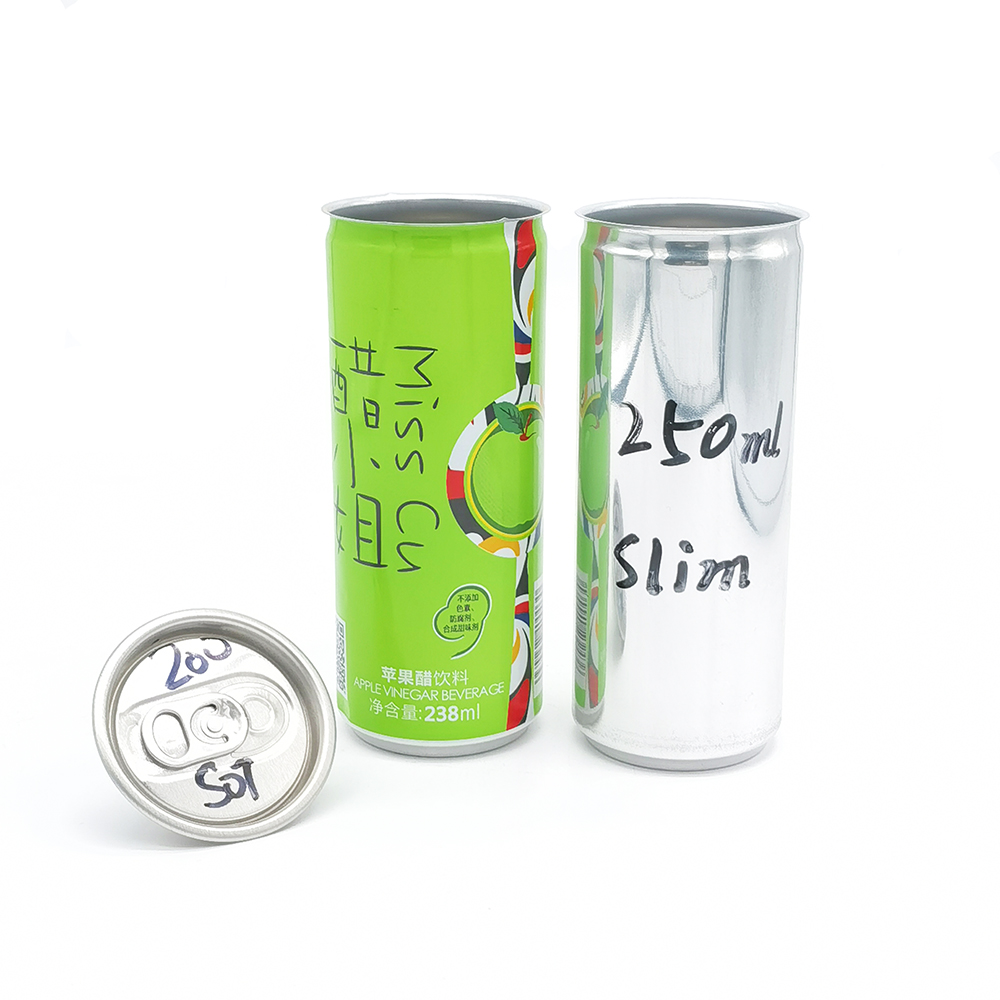
Physical dimensions quietly influence how buyers categorize your product. When shoppers scan a cooler door, they process shape before reading labels. Your packaging size dictates perceived value long before the first sip.
Consumers inherently link slim aluminum cans to elegance, modernity, and wellness. The narrower grip feels delicate in the hand, separating it from the aggressive, hyper-masculine aesthetics traditionally dominating the energy sector. Clean energy brands leverage this psychological shortcut. If your formula uses adaptogens, natural green tea extract, or plant-based ingredients, a sleek format visually aligns with your nutritional claims. It signals a premium lifestyle product rather than a standard utility beverage.
Consumer pushback on shrinkflation presents a massive risk. Social media platforms and forums feature countless complaints from buyers noticing volume reductions. If you transition an existing product from a 16oz standard can down to a 12oz sleek can while maintaining the same $2.99 price point, you invite severe criticism.
Changing sizes requires careful narrative management. You cannot simply shrink the package. You must offer a justification. Common strategies include reformulating the product for higher efficacy, moving to organic ingredients, or introducing functional nootropics. Volume changes must always align with a clear, consumer-facing benefit to prevent brand erosion.
Consider spatial efficiency if your distribution strategy targets closed environments. Slimmer profiles perform exceptionally well in specialized channels. Airlines utilize small beverage carts requiring compact footprints. Hotel minibars and cruise line cabins offer severely limited shelf space. Vending machines optimize internal mechanics for specific diameters. If your growth model relies on hospitality or travel sectors, prioritizing spatial efficiency yields higher placement rates.
Never reduce volume silently; always pair size reductions with formula upgrades.
Match the can diameter to your target demographic's aesthetic expectations.
Survey closed-channel buyers (like airline procurement) regarding their spatial limits before finalizing dimensions.
Marketing teams often design beautiful packaging concepts only to hit brutal operational bottlenecks. In two-piece manufacturing, can size impacts every stage of production, sourcing, and filling. You must understand these realities to protect your margins.
Not all filling lines handle all can diameters. A standard 16oz can uses a 211 body diameter. A 12oz sleek can typically uses a 204 body diameter. Co-packers design their conveyor tracks, seaming chucks, and filling valves around specific geometries.
If you ask a co-packer to switch their line from a standard 211 setup to a sleek 204 setup, you trigger a "changeover." Changeovers require hours of mechanical adjustments. Filler facilities despise downtime. Consequently, they pass this cost onto you. They either charge heavy changeover fees or demand massive minimum runs to justify the mechanical switch. Always verify line compatibility before finalizing your design.
Emerging brands sometimes want unique shapes to stand out on shelves. While custom can sizes offer intense visual differentiation, they introduce catastrophic supply chain risks for startups.
Bespoke dimensions require custom tooling and dies at the manufacturing plant. Can suppliers will not interrupt their high-speed lines for small custom runs. They demand massive Minimum Order Quantities, frequently exceeding tens of millions of units. This severely limits agility. You tie up millions of dollars in packaging inventory.
Verdict: Stick strictly to industry-standard two-piece tooling unless you guarantee enterprise-scale, multi-national volumes.
Diameter and height impact your outbound freight costs per unit. When you design a product, you ship pallets of empty cans in, and pallets of filled cans out. Taller, slimmer cans stack differently than shorter, wider ones.
A poorly chosen dimension might cause a pallet to "cube out" (hit the maximum height limit inside a truck) before it "weighs out" (hits the maximum weight limit). This inefficiency means you pay to ship empty air. Standard formats undergo decades of optimization to maximize pallet yield. Straying from these formats directly increases your shipping cost per fluid ounce.
Corporate sustainability targets now influence procurement choices. Evaluating your packaging through an ESG (Environmental, Social, and Governance) lens ensures compliance with retailer mandates and consumer expectations. Size directly dictates your carbon footprint.
Basic geometry dictates packaging efficiency. A perfect sphere offers the lowest surface area relative to its volume. Cylinders mimic this rule. Larger, wider cans inherently use less aluminum per fluid ounce than multiple smaller cans.
If you deliver 16 ounces of liquid, packaging it in a single 16oz standard can requires significantly less metal than packaging it in two 8oz slim cans. By maximizing the product-to-packaging weight ratio, you lower your per-ounce carbon footprint. Brands pursuing aggressive environmental claims often leverage larger formats to reduce total aluminum usage.
Major global suppliers continually optimize standard shapes. Through a process called lightweighting, engineers shave microscopic fractions of a millimeter off the can walls without sacrificing structural integrity.
Because the 12oz standard, 16oz standard, and 12oz sleek formats represent billions of units globally, suppliers focus all their R&D on lightweighting these specific profiles. If you choose standard energy drink cans, you automatically inherit these material reductions over time. Non-standard profiles rarely benefit from these technological advancements, leaving your brand with a heavier, more carbon-intensive package.
Metric Assessed | Smaller Formats (e.g., 8.4oz) | Larger Formats (e.g., 16oz) |
|---|---|---|
Aluminum per Fluid Ounce | Higher | Lower |
Supplier Lightweighting Priority | Moderate | High |
Shipping Efficiency (Filled) | Good | Excellent |
Navigating these variables requires a systematic approach. Brand managers and procurement teams should use this step-by-step matrix to evaluate options objectively.
Define the formulation volume. Start with the liquid. Are you selling a highly-caffeinated shot intended for immediate consumption? A 250ml slim format works best. Are you selling a slow-sipping functional beverage packed with amino acids? A 16oz standard format supports extended consumption. Let the dosage dictate the starting volume.
Audit local co-packer capabilities. Before hiring a designer, call your shortlisted filling facilities. Ask for their exact seaming chuck sizes and track geometries. Rule out any sizes they cannot process natively. If they demand a $10,000 changeover fee to run a sleek can, you must factor that into your unit economics.
Analyze retail slotting requirements. Visit your target grocery or convenience stores. Look at the gravity-fed racks and spring-loaded pushers on the cooler shelves. Retailers size these displays for specific diameters (usually 211 or 204). If your chosen can diameter causes the pushers to jam, retailers will drop your SKU. Ensure physical compatibility with standard retail hardware.
Calculate landed cost. Build a pricing model factoring in every step. Calculate the cost of blank cans versus direct printed MOQs. Include the cost of shrink sleeving if your volumes are low. Finally, calculate your pallet yield for outbound freight. A format looking cheap per unit might become expensive once loaded onto a truck.
Designing labels before confirming co-packer line capabilities.
Ignoring the cost difference between 200, 202, and 206 ends (lids).
Assuming grocers will modify their shelf pushers to accommodate a unique package size.
The optimal aluminum format sits at the intersection of your marketing narrative and your supply chain constraints. You cannot prioritize shelf appeal while ignoring manufacturing compatibility. A sleek profile might win focus groups, but if your regional filler cannot seam it efficiently, your margins will collapse.
For new market entrants, standard 12oz sleek energy drink cans or 16oz standard formats offer the safest, most predictable path to scale. They balance modern aesthetic demands with widespread manufacturing support.
Your immediate next step requires operational diligence. Request detailed specification sheets from your preferred packaging manufacturer. Cross-reference their diameter tolerances and seaming requirements against your co-packer’s equipment capabilities. Only commit to a final brand design once you verify seamless production synergy.
A: Custom tooling generally requires enterprise-level commitments, often exceeding 5–10 million units annually. Standard sizes (printed) usually sit between 100k–200k, while sleeved standard cans can be sourced for 10k–50k units.
A: Yes. Standard cans typically use a 202 end, while 250ml slim cans usually require a smaller 200 end. Procurement must ensure ends match the specific can body type.
A: On a per-unit basis, sleek cans can carry a slight premium due to market demand and specialized manufacturing lines, though the cost gap has narrowed significantly as sleek cans have become a dominant industry format.


