Views: 0 Author: Site Editor Publish Time: 2025-12-04 Origin: Site


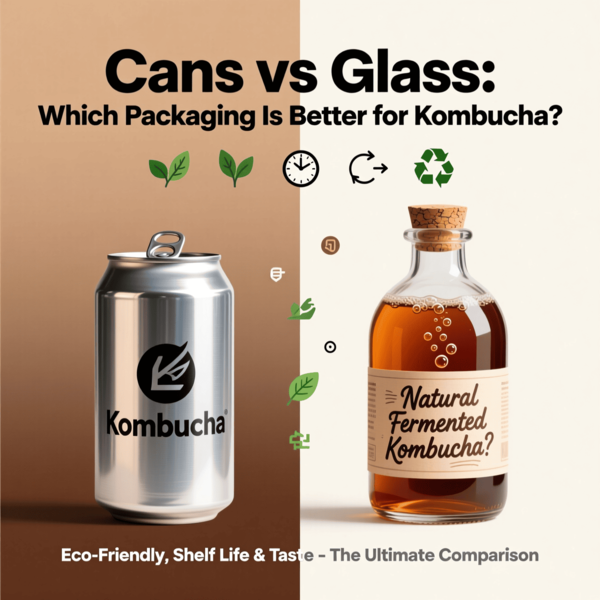
For kombucha brands, choosing between aluminum cans and glass bottles is a major decision. It’s not just about how your product looks. Your choice affects the drink’s quality, your business costs, and how customers see your brand.
The kombucha market is growing fast. In the United States alone, it is projected to expand from $1.20 billion in 2024 to $2.96 billion by 2033. Globally, the market could reach up to $19.12 billion by 2033. To stand out, your packaging must be smart.
This guide will honestly compare cans and glass bottles. We will look at facts about product protection, costs, customer experience, and sustainability. Our goal is to help you make the best choice for your brand.
Packaging is your product's first impression. For a live, fermented drink like kombucha, the right package does two key jobs. First, it must protect the delicate probiotics and flavors. Second, it must tell your brand's story on the shelf.
Today, customers want drinks that are healthy, natural, and sustainable. Kombucha fits this trend well. Your packaging must reflect these values. The wrong choice can lead to spoiled product, unhappy customers, and lost money.
The most common choices are aluminum cans and glass bottles. Each has clear strengths and weaknesses. The right one for you depends on your specific product, customers, and business goals.
The main job of packaging is to keep your kombucha fresh, fizzy, and full of live cultures. Here is how the two options compare.
Sunlight and artificial light are bad for kombucha. Light can change the flavor and kill the good probiotics.
Aluminum Cans are the clear winner here. They block 100% of light, acting like blackout curtains for your brew. This gives the best protection for flavor and live cultures.
Glass Bottles let light through. Clear glass offers almost no protection. Amber or green glass blocks some light, but not all. Your product is always at some risk on a bright store shelf.
Kombucha needs to stay sealed from air. Oxygen can spoil the taste and let the carbonation escape.
Both Perform Well. Modern aluminum cans and glass bottles with good seals are excellent at keeping air out. When sealed properly, both can maintain carbonation and prevent oxidation effectively.
How does the package survive the journey from your facility to the customer's fridge?
Aluminum Cans are tough. They are lightweight, don't break, and are easy to stack. This means lower risk and cost during shipping and storage.
Glass Bottles are heavy and can break. They need careful handling. However, their solid feel can make customers think the product is premium and high-quality.
The Verdict on Protection: If your top priority is maximizing shelf life and protecting live cultures from light, cans have a strong advantage. Glass requires more careful supply chain management.

Your kombucha packaging choice affects your budget, operations, and brand image.
Aluminum Cans often have a high minimum order quantity. This can be a barrier for very small brands. The cans themselves can be cost-effective at large scale.
Glass Bottles can be more flexible for small batches. You can order smaller quantities of many bottle shapes. However, custom glass molds are very expensive.
Weight and size matter for your logistics.
Aluminum Cans are Lighter and Compact. Cans weigh much less than glass. They also pack together tightly. This means you can ship more product for less money and use warehouse space better.
Glass Bottles are Heavy and Fragile. Their weight increases shipping costs. You also need special packaging to prevent breakage, adding more cost and waste.
How does your product look in a store?
Aluminum Cans look modern, portable, and fun. Cans offer a large area for colorful designs. This fits brands that are trendy, active, or aimed at a younger crowd.
Glass Bottles look classic, pure, and premium. They communicate authenticity and natural quality. Many traditional and health-focused brands prefer glass for this reason. Data shows that as of 2024, glass bottles still held the largest share (73.5%) of the kombucha packaging market.
The Business Verdict: Cans are often cheaper to ship and store and fit an on-the-go lifestyle. Glass offers a premium, authentic feel that justifies a higher price but comes with higher logistics costs.
What do your customers care about when they buy and drink your kombucha?
Aluminum Cans are the king of convenience. They are portable, don't need an opener, and are perfect for picnics, gym bags, or pools where glass isn't allowed.
Glass Bottles are often for at-home enjoyment. They may need an opener. Some customers also see drinking from a glass bottle as a more mindful experience.
Customers care about the planet. The facts here are important.
Aluminum Cans are infinitely recyclable. Turning an old can into a new one uses 95% less energy than making new aluminum. The recycling loop for aluminum is very efficient, and cans are often recycled at a higher rate than glass.
Glass Bottles are also 100% recyclable forever. However, recycling glass saves less energy (about 30%) compared to making new glass. Glass is heavier, which increases the carbon footprint of transportation. Its big advantage is that it can be reused many times before recycling.
A key point from researchers is that true sustainability requires looking at the entire life cycle—from making the package to disposing of it. Both materials have strong recycling stories, but their environmental impact differs in the production and transport stages.
The Experience Verdict: Cans win on portability and convenience and have a strong, efficient recycling story. Glass offers a premium ritual and reuse potential, which appeals to a different kind of consumer.

So, which one is right for your kombucha? Ask these questions:
Choose Aluminum Cans if your brand is:
Trendy, active, and modern.
Sold in places like gyms, convenience stores, or at events.
Focused on strong, consistent flavor and long shelf life.
Looking to minimize shipping costs and environmental impact from transport.
Choose Glass Bottles if your brand is:
Premium, artisanal, or traditional.
Sold in health food stores, cafes, or for at-home consumption.
Emphasizing raw, live cultures and a "craft" heritage.
Targeting customers who value the feel and perceived purity of glass.
You don't have to pick just one. Many successful brands use both:
Use cans for single-serve, on-the-go sales.
Use glass for larger, multi-serve bottles for home sharing.
This lets you reach different customers in different places.
After reading the detailed comparison, this interactive scorecard will help you turn theory into action. Please score each statement (1-5) based on your specific brand and product situation. Then, compare the total scores for aluminum cans and glass bottles to get clear, actionable guidance.
How to Use It:
Team Collaboration: Invite your marketing, operations, and finance leads to score it together for diverse perspectives.
Objective Assessment: Base scores on existing data and market research, not personal preference.
Interpret Results: Calculate the totals and refer to the interpretation guide at the end.
| Evaluation Dimension | Specific Criteria | Score for Cans (1-5) | Score for Glass (1-5) | Scoring Notes & Key Facts |
|---|---|---|---|---|
| A. Cost & Operations | 1. Sensitivity to Upfront Investment | Key Fact: Cans have high minimum order quantities but lower tooling costs. Glass offers flexible order sizes but custom molds are very expensive. Glass may score higher if you have limited startup capital. | ||
| 2. Priority on Logistics Cost Control | Key Fact: Cans are lightweight (approx. 80% lighter than glass) and stack efficiently, significantly reducing shipping and storage costs. A core advantage for cans. | |||
| 3. Compatibility with Existing Filling Line | Key Fact: Assess your current or planned equipment. Switching packaging types may require major production line changes. | |||
| B. Brand & Market | 4. Conveys a "Premium/Natural" Image | Key Fact: Market research shows glass is strongly associated with "purity" and "craft." Cans are seen as "modern" and "trendy." | ||
| 5. Fits "On-the-Go/Portable" Occasions | Key Fact: Cans are safer, more portable, and standard for gyms or outdoor channels. Glass suits at-home or café consumption. | |||
| 6. Alignment with Target Sales Channels | Key Fact: Cans have strong impact in convenience stores; glass is often preferred in health food stores or cafés. | |||
| C. Product & Quality | 7. Need for Maximum Light Protection | Key Fact: Cans provide 100% light blocking, offering the best protection for light-sensitive flavors and probiotics. | ||
| 8. Maintaining Strong Carbonation | Key Fact: Both seal well, but cans' durability during transport may better preserve bubble stability over time. | |||
| 9. Need for Product Visibility | Key Fact: If you want consumers to see the brew, clear/amber glass is the only option (but sacrifices light protection). | |||
| D. Sustainability | 10. Emphasis on a "Recyclability" Story | Key Fact: Cans' "infinitely recyclable" message and high recycling rate are clear to communicate. Glass's "reusability" has strong emotional appeal. | ||
| 11. Matches Target Audience's Eco-Perception | Key Fact: Some consumers perceive "glass as greener," while others recognize aluminum's efficient recycling. Match your audience's view. | |||
| 12. Priority on Lightweight Transport (Lower Carbon) | Key Fact: In a full lifecycle analysis, cans often have a lower transport carbon footprint due to their light weight. | |||
| TOTAL SCORE | Σ A-D Score: ____ | Σ A-D Score: ____ |
If One Option Scores Clearly Higher (Difference ≥ 8 points): This is a strong signal that this packaging aligns better with your current brand needs. Seriously consider the higher-scoring option.
If Scores Are Very Close (Difference ≤ 3 points): This means both have merits for your brand. We recommend you:
Review Key Criteria: Re-examine scores in the dimensions most critical to you, like Cost (A) or Brand Image (B4).
Consider a Hybrid Strategy: This is the ideal scenario for a dual "Cans + Glass" approach. Use cans for your core on-the-go line and glass for a premium, at-home series.
Run a Market Test: Produce small batches in both packages for consumer focus groups or a limited channel test. Let real market feedback make the final decision.
Remember: This scorecard is a decision map, not a final verdict. Markets and brands evolve. Revisit this assessment every 12-18 months to ensure your packaging strategy continues to support your growing brand.
Hope this practical tool brings clarity and confidence to your decision.
Below, you'll find direct answers to the most critical questions kombucha brands face when choosing between cans and bottles.
| Question | The Short Answer | Key Considerations & Data |
|---|---|---|
| 1. What is the minimum order quantity (MOQ) for my first production run? | It varies greatly: Cans have high MOQs (e.g., 50,000+ units). Glass Bottles can be as low as one pallet. | Startups favor glass for its flexibility. For cans, co-packing or shared runs with other brands can lower the barrier to entry. |
| 2. Do I need a different filling line to switch packaging? What's the cost? | Yes, typically. Converting can be a major capital expense. Some modern lines are designed to handle both with change parts. | A new dedicated line costs tens of thousands to hundreds of thousands of dollars. Retrofitting an existing line is cheaper but may limit speed or capability. |
| 3. Which packaging has a higher conversion rate on the shelf? | It depends on your target channel and customer. Cans win in convenience stores; glass conveys premium quality in health food stores. | 73% of consumers prefer eco-friendly packaging. Aluminum's high recycling rate (68% vs. glass at 31%) is a strong marketing point. |
This is often the first practical hurdle. For glass bottles, suppliers often cater to smaller batches, with minimums as low as one pallet. This allows for manageable inventory and lower upfront cost. In contrast, aluminum cans typically require a commitment to tens or hundreds of thousands of units directly from the can manufacturer. This is due to the high efficiency of canning lines.
Strategic Advice: For new brands, glass offers a accessible entry point. To use cans, consider partnering with a co-packer (contract packaging facility) who purchases cans in massive volumes and can offer you a much lower effective MOQ by fitting your product into their scheduled runs.
Your packaging choice is tied to your production equipment. Most small breweries start with a monobloc filler designed for either bottles or cans. Switching requires a significant investment.
Cost Scale: A basic manual filling line may cost $10,000-$30,000, while a high-speed, automated rotary filler can cost $100,000 or more.
Flexibility Option: Some equipment suppliers offer filling machines advertised as suitable for "Cans, Bottles" with customization. Specifically, certain models are designed so that "simply replacing equivalent components, can realize conversion between different bottles". This modularity can future-proof your investment but has upfront costs.
The Co-Packing Alternative: Using a co-packer eliminates this capital expenditure, as they already have the lines. You pay a per-unit fee but avoid the large, fixed cost of machinery and maintenance.
"Conversion" isn't just about the container; it's about matching the package to the consumer's mindset in a specific retail environment.
The Case for Cans: They are synonymous with portability, recreation, and modern branding. In a convenience store cooler or at a gym, a can signals a ready-to-drink, single-serve product. With 73% of consumers stating a preference for sustainable packaging, the strong recycling story of aluminum (endlessly recyclable with a 68% rate) is a powerful conversion tool.
The Case for Glass: It communicates premium quality, purity, and tradition. In a health food store where shoppers scrutinize labels, glass supports a "craft" and "authentic" brand image. It also allows the product's color to be visible, which can be appealing.
Market Data Insight: The booming kombucha market, projected to grow significantly in the coming years, is driven by health-conscious consumers. Your packaging must instantly communicate your brand's alignment with these values—whether through the modern, eco-efficient image of cans or the classic, premium feel of glass.
There is no single "best" package. There is only the best package for your brand.
Aluminum Cans are the practical, protective, and portable choice for growth-focused brands.
Glass Bottles are the classic, premium choice for brands built on authenticity and craft.
Think about your product, your customers, and your story. Let that guide your choice. By making an informed decision, you will protect your brew, connect with your customers, and build a stronger, more successful brand.
Having explored the key considerations, you're now equipped to choose the perfect "armor" for your brew. If that armor is the highly protective, sustainable, and trendy aluminum can, we have all the support you need ready and waiting.
We are more than just a can supplier; we are packaging partners passionate about growing with innovative brands. We get excited about your unique recipes and are dedicated to helping you stand out through our expertise—from flexible production runs and premium printing to reliable supply.
Share your product vision and requirements with our team, and we will provide a customized service plan and a compelling quote. Let's join forces to create the next big hit in kombucha!